Table of Contents
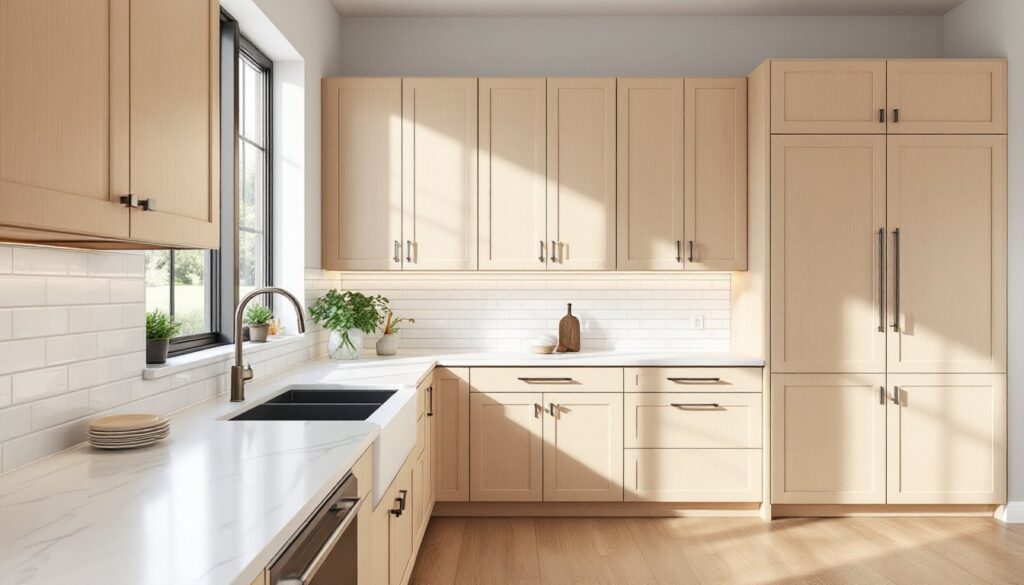
ToggleLight wood kitchen cabinets are staging a comeback, and for good reason. They open up cramped spaces, pair with nearly any design style, and age gracefully without looking dated. Whether you’re mid-remodel or just exploring cabinet replacement, understanding which woods hold up best, how finishes affect durability, and what hardware complements the grain can save you from costly mistakes. This guide walks through the practical side of choosing, installing, and maintaining light wood cabinets, with real-world trade-offs and material specs that matter when you’re making selections at the lumberyard or cabinet shop.
Key Takeaways
- Light wood kitchen cabinets offer a timeless aesthetic that works across multiple design styles—from Scandinavian to contemporary—while maintaining strong resale value without locking you into a specific design decade.
- Maple and white oak are the most durable hardwood choices with superior moisture resistance, while bamboo and pine provide budget-friendly alternatives for light-use areas or DIY projects.
- Hardware and finish selection significantly impact the final appearance; brushed nickel and matte black create modern contrast, while water-based polyurethane and hardwax oil finishes offer distinct maintenance profiles.
- Daily maintenance with pH-neutral soap and immediate drying prevents finish damage and grease buildup around sinks and cooking zones—the most vulnerable areas in light wood kitchen cabinets.
- Soft-close hinges, proper range hood ventilation (minimum 100 CFM per linear foot), and keeping interiors dry are essential preventative measures that extend cabinet lifespan by decades.
Why Light Wood Kitchen Cabinets Are Trending in 2026
Light wood cabinets hit a sweet spot between the stark brightness of white lacquer and the heaviness of dark stained wood. In 2026, homeowners are prioritizing natural materials, improved indoor air quality (low-VOC finishes), and flexible design that won’t require a gut renovation in five years.
From a practical standpoint, light wood reflects more ambient and task lighting than darker finishes, which reduces the need for additional fixtures in windowless or galley kitchens. That translates to lower electrical loads and simpler lighting layouts during remodels.
The resale angle matters, too. Appraisers and buyers consistently favor neutral, timeless finishes over trendy colors. Light wood, especially when paired with modern light wood kitchen cabinets hardware in brushed nickel or matte black, reads as contemporary without locking the kitchen into a specific decade. Real estate agents report that kitchens with natural wood tones move faster in markets where farmhouse, Scandinavian, and mid-century modern styles overlap.
Another factor: supply and sustainability. Domestic hardwoods like maple and oak are more readily available than exotic imports, and many cabinet shops now offer FSC-certified options. If you’re pulling permits for a remodel, inspectors in some jurisdictions (especially California, Oregon, and parts of the Northeast) are starting to flag formaldehyde content in composite cores. Solid hardwood or plywood-core cabinets with water-based finishes sidestep that scrutiny.
Best Types of Light Wood for Kitchen Cabinets
Not all light woods perform equally under the heat, moisture, and daily abuse a kitchen dishes out. Here’s what to expect from the most common species, along with a couple budget alternatives.
Maple, Oak, and Birch: Classic Light Wood Choices
Maple is the workhorse of cabinet shops. It’s dense (Janka hardness around 1,450 lbf), machines cleanly, and takes stain evenly, though many builders leave it natural or use a clear satin poly to let the tight, uniform grain show through. Maple’s closed grain resists moisture intrusion better than open-grain species, which matters around sinks and dishwashers. Expect to pay $150–$250 per linear foot for full-overlay, frameless maple cabinets from a mid-tier shop (prices vary by region and whether you’re buying stock, semi-custom, or custom).
Red oak and white oak both offer a prominent grain pattern that some homeowners love and others find too busy. White oak is slightly harder and more water-resistant due to its closed pores: red oak is more affordable but benefits from a good topcoat. Oak’s open grain can trap dust and grease, so sealed finishes (conversion varnish or water-based poly) are non-negotiable. Both species are widely available as domestic lumber, keeping costs in the $120–$200 per linear foot range.
Birch splits the difference: harder than oak, more affordable than maple, with a fine, even grain. It’s a go-to for paint-grade work, but natural birch with a clear finish has gained traction in modern light wood kitchen cabinet designs. One caution: birch can show color variation from board to board, some pieces pull pink, others yellow. If consistency matters, ask your cabinet maker to pull from the same lot or specify select-grade lumber.
Bamboo and Pine: Budget-Friendly Alternatives
Bamboo isn’t technically a wood, it’s a grass, but it’s marketed alongside hardwoods and offers solid performance for the price. Strand-woven bamboo is harder than maple (up to 3,000 lbf Janka), resists moisture well, and carries green-building cred. Downsides: it can darken over time with UV exposure, and not all cabinet shops work with it. If you’re sourcing bamboo cabinets, confirm the adhesive is low-VOC and the product is certified by the Forest Stewardship Council or equivalent.
Pine is the budget play, soft, easy to work, and widely available, but it dents and scratches more readily than hardwoods. It’s best for cabinets that see light use (pantry, upper cabinets away from the stove) or for DIYers comfortable with a lived-in, rustic look. Knotty pine adds character: clear pine costs more and still needs a durable topcoat. Expect $80–$150 per linear foot for stock pine cabinets, depending on construction quality and finish.
Design Styles That Work Perfectly With Light Wood Cabinets
Light wood cabinets adapt to a surprising range of aesthetics, if you match the door style, hardware, and countertop correctly.
Scandinavian/Nordic: Clean lines, flat-panel or slab doors, minimal hardware (or touch-latch), white or light gray walls, and matte black fixtures. Birch or maple with a natural oil finish fits here. Keep countertops simple: white quartz, honed marble, or butcher block.
Mid-Century Modern: Think tapered legs on base cabinets (if you’re building custom islands), horizontal grain matching, and integrated pulls or finger grooves. Walnut accents (a darker wood) can ground an all-light-wood kitchen. Pair with terrazzo or solid-surface counters and globe pendant lights.
Modern Farmhouse: Shaker-style doors in oak or pine, brushed brass or oil-rubbed bronze hardware, and a mix of open shelving with closed cabinets. This style benefits from curated home product guides that balance rustic and refined. Subway tile backsplashes and apron-front sinks complete the look.
Contemporary/Minimalist: Frameless (Euro-style) construction, slab doors with horizontal grain, integrated appliances, and handleless push-to-open mechanisms. Maple or bamboo with a matte clear coat works well. Quartz or concrete countertops keep the palette neutral.
Japanese/Wabi-Sabi: Embrace natural imperfections, knots, color variation, and hand-planed textures. Pine or reclaimed light wood, exposed joinery (dovetails, mortise-and-tenon), and simple cup pulls in blackened steel or ceramic. This style suits DIYers comfortable with hand tools and patient finishing work.
Whatever style you choose, the key is consistency. Mixing too many wood tones (light cabinets, medium floor, dark island) can muddy the design. Stick to one or two wood species and let the grain and hardware do the talking.
How to Choose the Right Hardware and Finishes
Hardware and finish selections can make or break a light wood cabinet installation. Get them wrong, and even premium maple looks builder-grade.
Hardware Material and Style:
- Brushed nickel and satin nickel are neutral workhorses that complement light wood without competing. They hide fingerprints better than polished chrome.
- Matte black creates high contrast and reads modern, but it shows dust and water spots. Plan to wipe daily if you go this route.
- Brass (brushed, aged, or unlacquered) warms up cool-toned woods like birch. Unlacquered brass develops a patina over time, character or maintenance headache, depending on your taste.
- Wood or leather pulls extend the natural-material theme but require more upkeep near the sink and stove.
Pull vs. Knob:
Knobs work on doors: pulls are better for drawers (easier to grip with full hands). Standard placement: pulls centered on drawer fronts, knobs on the stile (vertical frame piece) opposite the hinge side of doors. If you’re drilling for hardware yourself, make a jig from scrap plywood to ensure consistent spacing, mistakes in hardwood are tough to hide.
Finish Options:
- Water-based polyurethane: Low odor, fast dry time, clear finish that won’t amber. Two coats minimum: sand lightly with 220-grit between coats.
- Oil-based poly: More durable, deeper luster, but slower to cure and yellows over time. Better for high-traffic areas.
- Conversion varnish: Professional-grade catalyzed finish sprayed on in cabinet shops. Extremely durable, chemical-resistant, but not DIY-friendly.
- Hardwax oil (e.g., Rubio Monocoat, Osmo): Penetrates the wood, easy to spot-repair, matte finish. Reapply annually in high-wear zones. Popular in European and contemporary kitchen designs.
- Stain + topcoat: If you want to shift the tone slightly (warmer, cooler, darker), test stain on scrap from the same lumber lot. Light woods can blotch without a pre-stain conditioner.
PPE for Finishing:
Always wear nitrile gloves, safety glasses, and a respirator rated for organic vapors (not just a dust mask) when applying solvent-based finishes. Work in a well-ventilated space or use a fan to exhaust fumes outdoors.
Maintaining and Caring for Light Wood Kitchen Cabinets
Light wood shows grease, fingerprints, and water spots more readily than painted or dark-stained cabinets. The upside: they’re easier to touch up and refinish when the time comes.
Daily and Weekly Cleaning:
- Wipe down with a damp microfiber cloth and a few drops of pH-neutral dish soap in warm water. Avoid all-purpose cleaners with ammonia, bleach, or citrus extracts, they can dull the finish or strip oil-based coatings.
- Dry immediately. Standing water will raise the grain and, over time, cause finish failure, especially around sinks and dishwashers.
- Use a separate cloth for handles and pulls to prevent cross-contamination of grease to cabinet faces.
Dealing With Grease and Grime:
- For stubborn buildup (common on cabinets flanking the range), mix 1 part white vinegar to 2 parts water. Test in an inconspicuous spot first.
- A paste of baking soda and water works on localized spots but can be mildly abrasive, apply gently and rinse thoroughly.
- If you have a hardwax-oil finish, re-oil the affected area after cleaning. The oil will re-saturate the wood and blend the repair.
Preventing Damage:
- Install a range hood with adequate CFM for your cooktop (minimum 100 CFM per linear foot of range width). This keeps aerosolized grease off upper cabinets.
- Use cabinet bumpers or soft-close hinges to prevent slamming, which can crack joints and loosen hardware over time.
- Keep cabinet interiors dry. If a pipe leaks or a spill occurs, pull items out and run a fan until the interior is bone-dry. Plywood and solid wood can warp if moisture lingers.
Refinishing and Touch-Ups:
Scratches and dings are repairable. For minor surface scratches on polyurethane finishes, buff with 0000 steel wool and reapply a thin coat of poly. For oil finishes, sand lightly with 320-grit, clean with mineral spirits, and apply a fresh coat of oil.
If the finish is failing broadly (peeling, alligatoring, or heavy discoloration), a full strip-and-refinish is the only fix. That’s a weekend project: remove doors and drawer fronts, strip old finish with a chemical stripper or careful sanding (80-grit to 220-grit progression), clean with tack cloth, and reapply your chosen finish. Rent a paint sprayer for the smoothest results, or use high-quality brushes and foam rollers for hand application.
Maintaining light wood cabinets isn’t difficult, but it does require consistency. A quick daily wipe-down and an annual inspection of hinges, finish, and hardware will keep them looking sharp for decades.