Table of Contents
ToggleGetting rid of an old refrigerator isn’t as simple as dragging it to the curb. These appliances are heavy, bulky, and contain refrigerants that require proper disposal under EPA regulations. Whether you’re upgrading to a newer model, dealing with a broken refrigerator pick up, or clearing out a rental property, knowing your removal options can save time, money, and your back. This guide walks through everything from prep work to free haul-away services, so homeowners can confidently handle refrigerator removal without calling in favors or risking injury.
Key Takeaways
- Prepare your refrigerator at least 72 hours before haul away by emptying food, defrosting completely, and removing all shelves and drawers to prevent water damage and safety hazards.
- DIY haul away refrigerator removal requires an appliance dolly, two people, and proper safety equipment—budget $15-50 in rental costs and 1-2 hours, but hire professionals if stairs are involved.
- Professional removal services range from $75-200, with appliance retailers offering $25-75 haul-away at delivery, junk removal companies charging $80-150, and some utility programs providing free pickup for energy conservation.
- EPA-certified refrigerant recovery is mandatory for all refrigerators before disposal—verify your chosen service is licensed to comply with federal regulations and avoid potential fines.
- Responsible disposal through RAD programs or certified recyclers recovers 95% of refrigerator materials including steel, copper, and plastic, while donation to Habitat for Humanity or Salvation Army offers tax deduction potential for working units.
When You Need to Haul Away a Refrigerator
Most refrigerator removals fall into a few clear categories. Understanding the situation helps determine the best disposal route.
Appliance upgrades are the most common reason. When a new fridge arrives, retailers often offer haul-away services for the old unit, sometimes free, sometimes for a fee. This convenience is worth considering when comparing delivery options.
Mechanical failures that make repair uneconomical trigger removal needs. If the compressor’s shot or the coolant system is leaking, fixing a 10+ year-old unit rarely makes financial sense. Broken units require certified disposal due to refrigerant regulations.
Property cleanouts during moves, estate sales, or rental turnovers often leave behind aging appliances. These situations benefit from services that handle washer and dryer pick up alongside refrigerator removal, clearing multiple items in one trip.
Energy efficiency upgrades motivate proactive replacement. Pre-2001 refrigerators use 40% more electricity than newer Energy Star models. The monthly savings on utility bills can justify early retirement of a working but inefficient unit.
Regardless of the reason, planning ahead prevents the common mistake of disconnecting a fridge before arranging removal, leaving it to defrost water onto floors for days.
Preparing Your Refrigerator for Removal
Proper prep work prevents damage to floors, doorways, and the appliance itself, plus it makes the job safer for everyone involved.
Start 72 hours before removal by emptying all food and turning off the unit. Unplug it and prop the doors open to allow complete defrosting. Place towels around the base to catch water from the freezer compartment. Built-up ice in older models can add 20+ pounds and create slipping hazards during transport.
Remove all shelves, drawers, and loose parts. Pack these separately or discard them. Leaving glass shelves inside risks breakage and creates dangerous shifting weight during moves. Tape or bungee-cord the doors shut once defrosted, swinging doors are a finger hazard and can catch on doorframes.
Measure doorways, hallways, and staircases along the removal path. Standard refrigerators are 30-36 inches wide, but French door and side-by-side models can exceed 42 inches. If clearances are tight, removing the refrigerator doors (usually just lifting off the hinges after unscrewing top pins) can buy 2-3 crucial inches.
Clean the coils and exterior if donating or reselling. Dusty coils signal neglect to potential recipients. A quick vacuum and wipe-down takes 10 minutes and improves perceived value.
Secure the power cord by taping it to the back panel. Loose cords become trip hazards and can snag on corners during maneuvering. This small step prevents most common moving accidents.
DIY Refrigerator Haul Away: Tools and Safety Tips
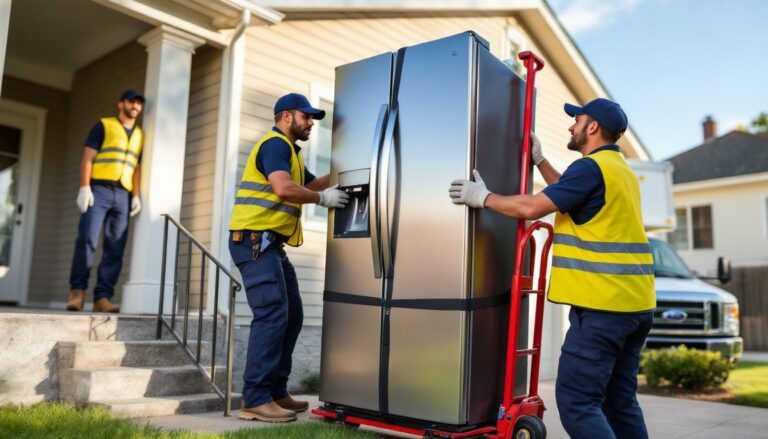
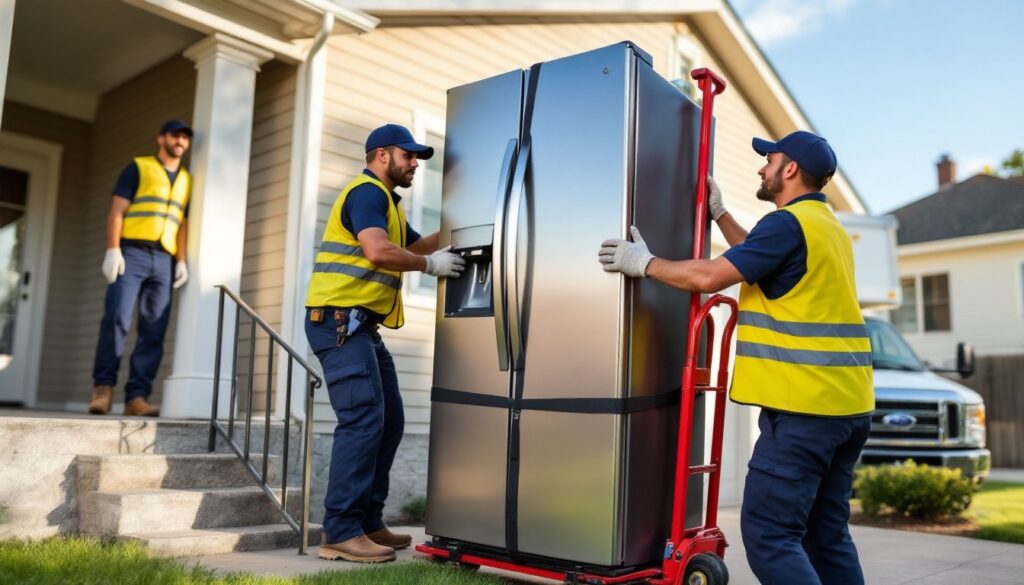
Moving a refrigerator solo is possible but not recommended. These units weigh 200-350 pounds empty, and the center of gravity shifts unpredictably. At minimum, recruit one strong helper and budget 1-2 hours for the job.
Essential equipment:
- Appliance dolly (not a standard hand truck), rent one from a hardware store for $15-25/day. These have a strap and wider base to handle top-heavy loads.
- Furniture sliders or pieces of cardboard for crossing finished floors without gouging.
- Work gloves with grip coating, refrigerator edges are sharp and painted surfaces slippery.
- Moving straps (optional but valuable) distribute weight across shoulders and keep hands free for balance.
Step-by-step process:
- Tilt the fridge back slightly and slide the dolly underneath from the side, centering it under the appliance’s weight. The dolly’s axle should align near the refrigerator’s midpoint.
- Strap it securely across the middle, pulling tight. Test for movement, any shifting will compound during transport.
- Navigate in reverse when going through doorways. The person controlling the dolly walks backward, while the helper guides the top and watches for obstacles.
- On stairs, take one step at a time. The person at the top pulls while the person below controls descent speed. Never rush this phase, most injuries happen on stairs.
- Load into a truck with the refrigerator upright. Laying it on its side can allow oil to flow into coolant lines, potentially damaging the compressor. If tipping is unavoidable, let the unit stand upright for 24 hours before plugging in.
Safety warnings: Wear steel-toe boots if available. Pinched toes from dropped corners are common. Keep the path clear of kids, pets, and clutter. If stairs are involved and your helper isn’t confident, stop and hire professionals, a $75 service call beats a $7,000 medical bill.
Professional Refrigerator Removal Services: What to Expect
Professional removal makes sense when dealing with difficult access, health limitations, or time constraints. Several service types exist, each with different pricing and scope.
Appliance retailers often bundle haul-away with delivery of new units. Expect $25-50 for this service, sometimes waived with purchase. They’ll remove the old fridge when dropping off the new one, handling everything in a single visit. Ask upfront whether this includes stairs or only ground-floor pickup.
Junk removal companies like 1-800-GOT-JUNK charge $80-150 for refrigerator-only jobs, more if adding washer and dryer removal or other items. Pricing typically depends on truck space used rather than appliance count. They arrive in teams of two, handle all labor, and sweep up afterward. Most dispose responsibly, though confirming proper recycling is worth a quick question.
Municipal bulk pickup programs vary widely. Some cities offer free appliance collection on designated dates, effectively free refrigerator disposal near me if timing works. Others charge $25-40 and require advance scheduling. Call local waste management or check the city website for specifics.
Scrap metal haulers sometimes offer free haul away old refrigerator service because they profit from reselling the metal and components. Searching “who will pick up old refrigerator for free near me” often surfaces these operators. Verify they’re licensed to handle refrigerants, unlicensed removal is illegal under EPA Section 608 regulations and can result in homeowner fines.
Utility company rebate programs occasionally include free pick-up for working but inefficient refrigerators as part of energy conservation initiatives. These programs recycle the units and may pay $25-50 on top of free removal. Availability depends on local utility providers and current program funding.
When comparing services, homeowners managing appliance removal costs should clarify whether pricing includes stairs, long carries (over 50 feet), and proper recycling certification. The cheapest option isn’t always the best if it leaves you liable for regulatory violations.
Eco-Friendly Disposal and Recycling Options
Refrigerators contain materials that are both valuable for recycling and hazardous if mishandled. Responsible disposal protects the environment and complies with federal law.
Refrigerant recovery is mandatory. All refrigerators manufactured before 2021 contain HFCs or CFCs, greenhouse gases regulated under the Clean Air Act. EPA-certified technicians must recover these refrigerants before scrapping. Legitimate recyclers and removal services handle this automatically: unlicensed scrappers often don’t, venting harmful gases.
RAD (Responsible Appliance Disposal) programs partner with retailers, utilities, and municipalities to ensure proper recycling. These programs recover 95% of refrigerator materials, including steel, plastic, glass, copper, and aluminum. Find participating locations through the EPA RAD locator on their website.
Donation as an alternative works if the unit still functions. Habitat for Humanity ReStores, Salvation Army, and local charities often accept working refrigerators. This option offers tax deduction potential and keeps functional appliances in use longer. Most require you to deliver the unit yourself, though some offer pickup for $30-60.
Metal recycling yards pay $10-30 for refrigerators after refrigerant removal. This small compensation can offset haul-away costs if you have truck access. Call ahead, many yards require proof of refrigerant recovery (a certification sticker or receipt) before accepting appliances.
What gets recycled: Steel comprises 60% of a refrigerator’s weight and is melted down for new products. Copper from motors and tubing is highly valuable. Plastic components are shredded and reprocessed. Foam insulation containing blowing agents is captured and destroyed to prevent atmospheric release. Glass shelves are typically crushed for aggregate use.
DIYers handling how to get rid of washer and dryer alongside refrigerators should note that similar regulations apply, recyclers usually accept multiple appliances per drop-off, streamlining disposal for full laundry room upgrades. For those researching options like washer and dryer recycling near me, the same facilities that process refrigerators typically handle all major appliances under one roof.
Cost Breakdown: How Much Does Refrigerator Removal Cost?
Removal costs vary based on service type, location, and access difficulty. Understanding the factors helps homeowners budget appropriately.
DIY costs run $15-50 total. Appliance dolly rental is $15-25/day. Add $10-15 for dump fees at municipal facilities that require payment. Truck rental increases costs if borrowing a vehicle isn’t an option, expect $20-40 for a 2-4 hour rental from U-Haul or Home Depot.
Professional removal ranges $75-200 for standard jobs. Companies handling appliance disposal typically charge at the lower end for straightforward, ground-floor pickups. Stairs add $25-50. Long carries, tight corners, or difficult access push prices toward $150-200. Combining services, like washer and dryer disposal with refrigerator removal, sometimes reduces per-item costs through bundling.
Retailer haul-away with new appliance delivery costs $25-75, sometimes included free with purchase. This convenience factor is worth considering when comparing store prices, a slightly higher purchase price with free haul-away may beat a lower price plus separate removal costs.
Free options include utility rebate programs, municipal bulk pickup (in participating areas), and scrap haulers who want the metal. Search terms like “free washer and dryer pick up” or free refrigerator disposal near me often reveal local programs. Timing and eligibility restrictions apply, so these aren’t always available on-demand.
Regional variations affect pricing significantly. Urban areas with competitive service markets run 20-30% cheaper than rural locations where providers travel farther between jobs. Coastal regions and high-cost-of-living metros trend toward the higher end of ranges.
Hidden costs to watch for: Some services quote low base rates then add fees for stairs, weight over 300 pounds, or non-refrigerant certification removal. Always ask for all-in pricing before confirming service. Comparing estimates through platforms like HomeAdvisor can help identify fair market rates in specific ZIP codes.
For homeowners tackling washer and dryer removal near me searches alongside refrigerator disposal, bundling these jobs with one service provider typically saves 15-25% compared to separate appointments. Most haulers charge by truck volume rather than item count, making multi-appliance removal more cost-effective.
Conclusion
Hauling away a refrigerator requires more planning than most appliance disposal jobs, but the process is manageable with the right approach. DIYers with proper equipment and a helper can handle straightforward removals safely, while professional services make sense for difficult access or time constraints. Prioritize EPA-compliant disposal to avoid regulatory issues and environmental harm. Whether going the free route through utility programs or paying for convenience, understanding the options ensures efficient removal without surprise costs or safety incidents.