Table of Contents
ToggleFinding a trail of ants marching across your kitchen counter isn’t just annoying, it’s a sign you need to act fast. Ant killer powder remains one of the most effective tools homeowners have for stopping infestations at their source. Unlike sprays that offer temporary knockdown, powder formulations create barriers and residual zones that eliminate entire colonies over time. This guide walks through what ant powder killer actually does, which types work best for specific situations, and how to apply it correctly without wasting product or creating safety hazards.
Key Takeaways
- Ant killer powder creates long-lasting barriers and residual zones that eliminate entire colonies over time, making it more effective than temporary spray solutions.
- Two main types—boric acid (stomach poison with 3–7 day action) and diatomaceous earth (physical exoskeleton damage)—work best in different conditions, with boric acid preferred indoors and DE for dry spaces.
- Proper application requires light, barely-visible dusting along baseboards, entry points, and wall voids using a bulb duster or pesticide duster, not piles of powder that ants will avoid.
- Ant killer powder treatments are low-toxicity to mammals when used correctly but require basic PPE (gloves, dust mask, safety glasses) and must be kept away from pets and children.
- Long-term ant prevention combines powder barrier treatments with sealing entry points, eliminating food and water sources, managing landscaping, and monitoring problem areas monthly for early detection.
- If infestations persist after three treatments over 6–8 weeks or involve carpenter ants, professional pest control operators with specialized non-repellent products may be necessary.
What Is Ant Killer Powder and How Does It Work?
Ant killer powder is a particulate insecticide designed to be spread along ant trails, entry points, and nesting sites. The powder works through contact and ingestion, ants pick it up on their bodies as they walk through treated areas, then carry it back to the colony where it spreads to other members through grooming and feeding behaviors.
Most formulations use one of two active mechanisms. Contact killers damage the ant’s exoskeleton or nervous system on touch, providing faster results but requiring direct exposure. Desiccant powders absorb the waxy protective coating on an ant’s body, causing dehydration and death over 24–48 hours. This slower action actually increases colony elimination because affected ants remain mobile long enough to contaminate nestmates.
The powder format offers advantages over liquid sprays or baits in specific scenarios. It stays active for weeks or months in dry conditions, making it ideal for preventive barriers along baseboards, foundation cracks, and window sills. Powders also reach into wall voids, electrical boxes, and other tight spaces where ants nest but liquids can’t penetrate effectively.
Understand that powder products don’t attract ants, they’re barrier treatments, not baits. For active foraging trails inside the home, many pest control pros recommend pairing powder barriers with gel or liquid baits to address both the immediate problem and long-term prevention.
Types of Ant Killer Powder for Different Infestations
Boric Acid-Based Powders
Boric acid is the workhorse of ant control. It’s a stomach poison that disrupts ant metabolism when ingested during grooming. Products typically contain 98–99% boric acid and appear as a fine white or blue powder.
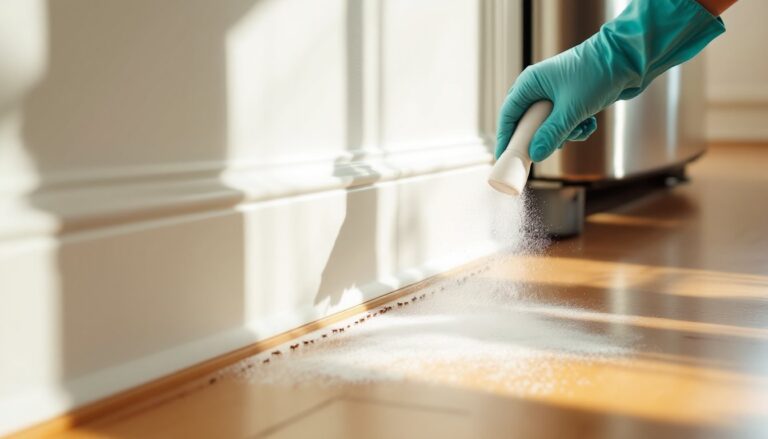
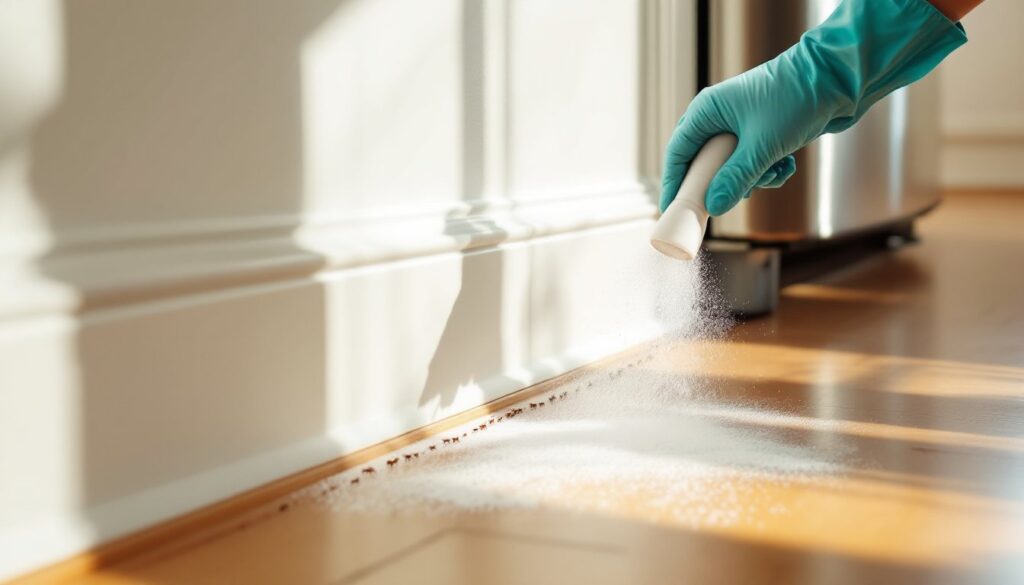
Application works best as a light dusting, think flour sifted on a cutting board, not piles of powder. Ants avoid heavy deposits, but they’ll walk through a thin layer without detection. Use boric acid along baseboards, behind appliances, inside wall cavities (drill small access holes if needed), and around pipe penetrations under sinks.
Boric acid performs well against common household species like odorous house ants, pavement ants, and Argentine ants. It’s less effective on carpenter ants, which require protein-based baits plus to barrier treatments. The powder remains stable indoors for months but breaks down quickly when wet, so it’s not suitable for outdoor perimeter defense in rainy climates.
One limitation: boric acid takes 3–7 days to kill, which homeowners sometimes mistake for product failure. Patience pays off, the delayed action allows foragers to contaminate the colony before dying.
Diatomaceous Earth (DE) Powders
Diatomaceous earth is fossilized algae ground into a powder with microscopic sharp edges. These edges cut through an ant’s exoskeleton, causing fatal moisture loss. Only use food-grade DE for pest control, pool-grade DE is chemically treated and poses respiratory hazards.
DE works purely through physical damage, not chemical toxicity, making it a preferred option for households avoiding synthetic pesticides. It’s particularly effective in dry spaces like attics, crawlspaces, and inside wall voids. Spread it with a hand duster or bulb applicator to create a fine layer, clumps are ineffective.
The main drawback is moisture sensitivity. DE becomes useless when wet and must be reapplied after rain or cleaning. In humid climates or damp basements, boric acid or synthetic alternatives perform better. DE also requires heavier application than boric acid to achieve comparable results, which can create visible residue on dark surfaces.
For outdoor use, apply DE around foundation perimeters, underneath siding, and along fence lines during dry weather. Reapply every 2–3 weeks or after precipitation. Indoor applications last until disturbed by vacuuming or foot traffic.
How to Apply Ant Killer Powder Effectively
Proper application makes the difference between eliminating an infestation and wasting product. Start by identifying ant trails and entry points, check along baseboards, windowsills, door thresholds, utility penetrations, and cracks in foundation walls.
Step 1: Prep the Treatment Area
Clean surfaces before application. Sweep away debris, wipe up food residue, and remove clutter. Powder adheres better to clean surfaces and ants are more likely to walk through it when competing attractants are removed.
Step 2: Choose the Right Applicator
A bulb duster (also called a hand bellows) gives precise control for treating cracks, crevices, and wall voids. For broader areas like attic floors or crawlspace perimeters, a pesticide duster with an extension wand covers ground faster. Avoid applying powder by hand, you’ll use too much and create repellent piles instead of effective barriers.
Step 3: Apply Lightly and Strategically
The goal is a barely visible dusting, not a visible line. Target these high-priority zones:
- Cracks and gaps where baseboards meet flooring
- Behind and beneath appliances (refrigerator, stove, dishwasher)
- Wall voids accessed through electrical outlet boxes (remove cover plates, puff powder inside, replace plates)
- Window and door frames where ants enter from outside
- Foundation perimeter in a 6–12 inch band around the home’s exterior
For wall voids, drill 1/8-inch holes near the baseboard every 12–18 inches, inject powder with the extension tube, then seal holes with caulk or wood filler.
Step 4: Monitor and Reapply
Check treated areas weekly. If you see fresh ant activity crossing a barrier, either the powder was disturbed or the species is avoiding it (some ants detect chemical treatments). Reapply as needed, but don’t layer on more product, remove the old application first with a vacuum, then reapply fresh powder.
The best ant control strategies often combine multiple product types, using powders for barriers and baits for active elimination. Indoor treatments typically show results within 5–10 days if the colony is reached.
Safety Precautions When Using Ant Killer Powder
Ant killer powders are low-toxicity to mammals when used correctly, but application still requires basic safety measures.
Personal Protective Equipment (PPE):
Wear nitrile gloves during application to avoid skin contact. Use a dust mask or N95 respirator when treating large areas or working in enclosed spaces like attics, inhaling fine powder irritates lungs. Safety glasses prevent powder from getting into eyes during overhead applications.
Pet and Child Safety:
Keep pets and children out of treatment areas until powder settles (typically 30–60 minutes). Apply powder in cracks and voids where curious hands and paws can’t reach it. Never spread powder on open floors or countertops where ingestion is likely.
Boric acid has low acute toxicity, a 50-pound dog would need to ingest about 1.5–3 ounces to show symptoms, but repeated exposure can cause stomach upset. Diatomaceous earth is non-toxic when ingested but can irritate lungs if inhaled in quantity.
Product Storage:
Store powder in its original container in a locked cabinet or high shelf, away from food and animal feed. Keep the container tightly sealed to prevent moisture absorption, which degrades effectiveness.
Ventilation:
When treating indoor spaces, open windows and run fans to disperse airborne particles. If treating a crawlspace or attic, work during cooler hours and take breaks every 15–20 minutes to get fresh air.
Cleanup:
Vacuum up excess powder with a shop vac (HEPA filter recommended) rather than a household vacuum, which may clog or release dust back into the air. Dispose of vacuum contents in a sealed plastic bag placed in outdoor trash.
If accidental ingestion occurs, contact Poison Control at 1-800-222-1222 immediately. Do not induce vomiting unless instructed. For skin or eye contact, flush with water for 15 minutes and seek medical attention if irritation persists.
Best Practices for Long-Term Ant Prevention
Powder treatments eliminate existing infestations, but permanent control requires addressing why ants entered in the first place.
Seal Entry Points:
Caulk cracks in foundation walls, around window frames, and where utility lines penetrate siding. Use silicone or polyurethane caulk for exterior gaps (both remain flexible through temperature changes) and acrylic latex caulk for interior trim work. Install door sweeps on exterior doors and replace damaged weatherstripping.
Eliminate Food and Water Sources:
Store pantry goods in airtight containers (glass or heavy plastic). Wipe down counters nightly and sweep floors to remove crumbs. Fix leaky faucets and pipes, moisture attracts ants as much as food. Clean up pet food bowls after feeding rather than leaving kibble out all day.
Landscape Management:
Trim tree branches and shrubs so they don’t touch the house, these create “ant highways” from outdoor colonies to your interior. Move firewood stacks, mulch, and compost bins at least 20 feet from the foundation. Replace organic mulch (wood chips, bark) near the foundation with inorganic alternatives like gravel or rubber mulch, which don’t harbor ant colonies.
Maintain Barrier Treatments:
Reapply powder along foundation perimeters every 3–4 months or after heavy rain. Indoor barrier treatments in wall voids last 6–12 months unless disturbed by renovations or pest control work.
Monitor Problem Areas:
Check kitchens, bathrooms, and utility rooms monthly for new ant activity. Early detection allows spot treatment before scouts recruit the colony. Keep a small container of powder or a bait station in the cabinet under the sink for quick response.
When to Call a Professional:
If you’ve treated an infestation three times over 6–8 weeks with no reduction in activity, the colony may be structural (inside wall voids, under the slab) or you’re dealing with multiple colonies. Carpenter ants causing structural damage always warrant professional inspection, they require specialized treatment and may indicate moisture problems that need addressing. Licensed pest control operators have access to non-repellent liquid insecticides and professional-grade dusts that provide longer residual control than retail products.
Most jurisdictions don’t require permits for residential pesticide application by property owners, but always follow product label instructions, the label is a legal document, and application rates and locations are legally binding.