Table of Contents
ToggleShopping for a KitchenAid French door refrigerator means you’re looking for more than cold storage, you’re investing in a workhorse appliance built to last 15-20 years. These counter-depth and full-depth models combine commercial-grade cooling tech with smart interior layouts designed around how real families actually use their fridges. Whether you’re replacing a builder-grade unit or upgrading during a kitchen remodel, understanding the differences between KitchenAid stainless steel French door refrigerators and their four-door refrigerator cousins will save you from buyer’s remorse and wasted cabinet space.
Key Takeaways
- A KitchenAid French door refrigerator features dual evaporator systems that keep the fridge and freezer on separate cooling loops, preventing freezer burn and extending produce life by 3-5 days compared to single-evaporator models.
- Counter-depth KitchenAid models project 24-25″ from the wall for a built-in look without custom cabinetry costs, while full-depth versions add 4-6″ of capacity but require careful kitchen planning.
- ExtendFresh Temperature Management and Preserva Food Care systems use zone sensors and activated carbon filters to compensate for door openings and reduce ethylene gas, keeping apples fresh 40% longer in testing.
- Realistic usable storage in a typical 36″ KitchenAid French door refrigerator breaks down to 15.5 cu. ft. in the fresh food section and 5.8 cu. ft. in the freezer drawer after shelves and bins are installed.
- Preventive maintenance every three months—including condenser coil cleaning and door gasket inspection—can extend the lifespan of your KitchenAid refrigerator from 12-15 years to 17-22 years.
- The 2026 lineup ranges from $2,800–$4,600, with counter-depth options starting at $2,800 for budget-conscious buyers and flex-drawer four-door models reaching $4,600 for frequent entertainers.
Why Choose a KitchenAid French Door Refrigerator?
KitchenAid builds refrigerators the same way they approach stand mixers: for durability under heavy use. Their French door lineup targets homeowners who cook frequently and need professional-level features without the 36″ commercial depth that eats up floor space.
Build quality starts with metal shelving instead of wire racks. The full-extension drawers ride on ball-bearing glides rated for 50,000 cycles, crucial when you’re pulling out 30-pound turkey pans. Stainless steel interiors in crisper drawers resist staining from beets and berries better than plastic alternatives.
Temperature consistency matters more than most buyers realize. KitchenAid’s dual evaporator system keeps the fridge and freezer on separate cooling loops, preventing freezer burn and that weird flavor transfer when fish sits next to ice cream. Independent compressors maintain ±1°F variance, which extends produce life by 3-5 days compared to single-evaporator models.
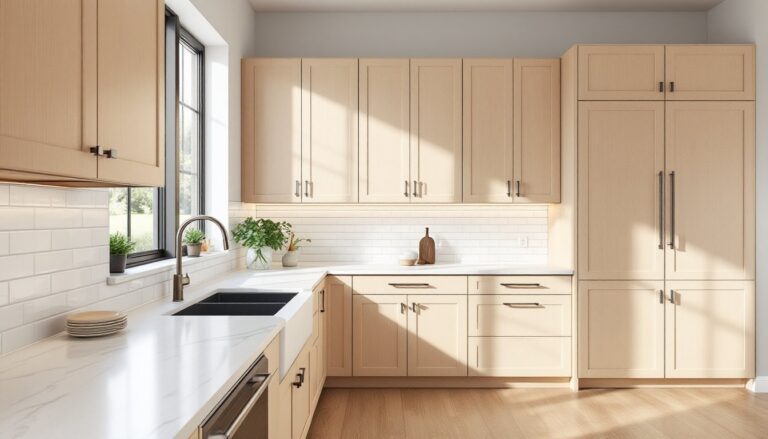
The counter-depth advantage gives you a built-in look without custom cabinetry costs. Standard models project 24-25″ from the wall (excluding handles), sitting flush with 24″ base cabinets and standard countertop overhangs. Full-depth versions add 4-6″ of capacity but require proper planning, measure your kitchen work triangle before committing.
Key Features That Set KitchenAid Apart
KitchenAid differentiates itself through components that matter during daily use, not just on the showroom floor.
ExtendFresh Temperature Management uses sensors in five zones to compensate for door openings and warm dishes. Place hot soup in the fridge, and the system ramps compressor speed for 12 minutes instead of letting the entire cavity warm up. This isn’t marketing fluff, it prevents the temperature spikes that trigger premature spoilage.
Preserva Food Care System combines the dual evaporator with activated carbon filters that scrub ethylene gas (the ripening hormone produce releases). Apples stored in these crispers last 40% longer in third-party testing. The FreshFlow air filter is a $15 replacement every six months, worth it if you buy produce in bulk.
Platinum Interior Design means LED lighting in four positions instead of a single top strip. Under-shelf and side-wall LEDs eliminate shadows when you’re digging for condiments. The lighting is also cooler, traditional incandescent bulbs added 8-12 watts of waste heat.
Many kitchen design experts recommend prioritizing interior lighting upgrades since they’re nearly impossible to retrofit. KitchenAid’s implementation is among the best at this price point.
Storage Capacity and Interior Layout
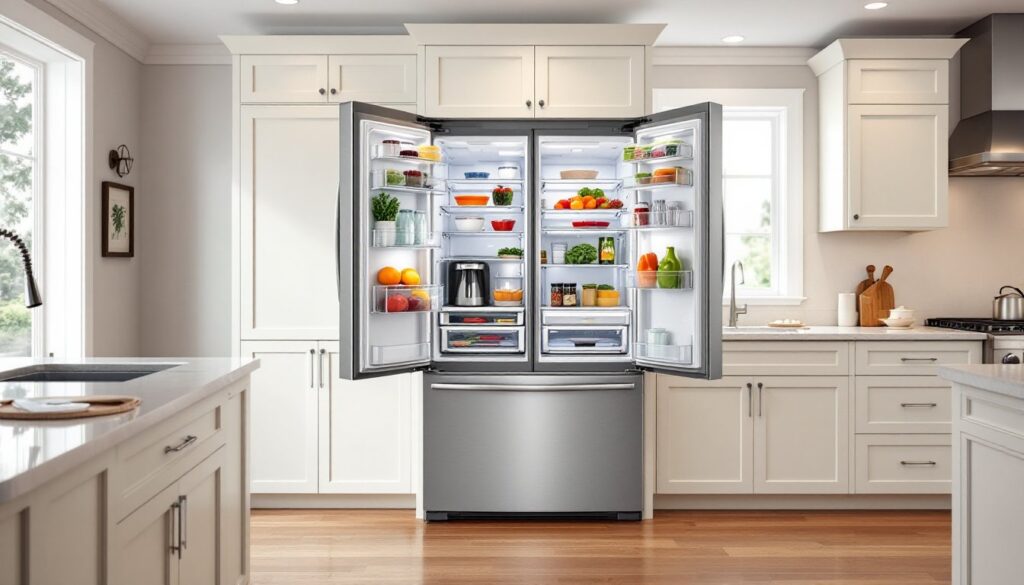
Capacity specs can mislead. A 22-cubic-foot KitchenAid stainless steel French door refrigerator doesn’t mean 22 usable cubic feet, manufacturers measure total interior volume before shelves and bins.
Realistic storage breakdown for a typical 36″ wide model:
- Fresh food section: 15.5 cu. ft. (after shelves)
- Freezer drawer: 5.8 cu. ft. (after baskets)
- Door bins: 0.7 cu. ft.
The adjustable shelf system uses Slide-Away technology. Middle shelves split and retract to make room for sheet cakes or punch bowls, no need to remove the entire shelf and find somewhere to stash it. Each half-shelf supports 25 pounds when properly seated.
Drawer configurations separate KitchenAid from competitors. The full-width pantry drawer (standard on most models) maintains 37°F, perfect for deli meat and cheese. It sits at eye level, not hidden in a bottom bin where you forget about $12 prosciutto until it’s fuzzy.
The four-door refrigerator layout adds a second drawer that operates as either a fridge or freezer. This flex zone runs from -6°F to 45°F in 1-degree increments. Use it for party prep (extra fridge space for a weekend), then switch to freezer mode for bulk meat storage Monday morning. The compressor takes 8 hours to fully transition temperatures, so plan ahead.
Top KitchenAid French Door Models for 2026
KitchenAid’s 2026 lineup includes four distinct tiers. Pricing reflects street prices as of April 2026, before delivery and installation.
KRFC704FPS (23.8 cu. ft., counter-depth, four-door): The premium choice at $4,200-$4,600. Includes the flex-temp drawer, hands-free AutoFill water dispenser, and PrintShield stainless that resists fingerprints without special cleaners. Dimensions: 35.875″ W × 69.875″ H × 23.875″ D (excluding handles). Best for families who entertain frequently or store both fresh and frozen bulk purchases.
KRFF507HPS (26.8 cu. ft., full-depth, French door): Mid-range workhorse at $3,200-$3,600. Full depth adds 4.5 cu. ft. capacity over counter-depth models. Standard dual evaporator, metal shelving, and ExtendFresh system. Dimensions: 35.875″ W × 69.875″ H × 29.125″ D. Choose this if your kitchen layout accommodates the extra depth and you need maximum storage.
KRFC300ESS (20 cu. ft., counter-depth, French door): Entry point at $2,800-$3,100. Drops the flex drawer but keeps the core cooling technology. Dimensions: 35.875″ W × 69.875″ H × 24.75″ D. Solid choice for kitchen remodels where cabinet depth is fixed and budget matters.
KRMF706ESS (25.8 cu. ft., full-depth, four-door): The capacity king at $4,000-$4,400. Same footprint as the KRFF507HPS but adds the flex drawer. Popular among home improvement enthusiasts planning large-scale kitchen renovations. Dimensions: 35.875″ W × 69.875″ H × 29.125″ D.
All models include a 2-year full warranty on parts and labor, plus a 5-year sealed system warranty covering compressor and evaporator. Extended warranties run $300-$500 for an additional 3 years, worthwhile if you’re hard on appliances.
Installation and Space Requirements for Your Kitchen
French door refrigerators are heavy, 300-350 pounds before you add the doors. You’ll need two people and an appliance dolly. Don’t skip this step: back injuries aren’t worth proving you’re tough.
Minimum clearances per KitchenAid spec sheets:
- Top: 1″ for ventilation
- Sides: 0.25″ each side (0.5″ total width allowance)
- Back: 1″ from wall (2″ if you have a rear exhaust model)
- Door swing: Add 24″ in front for full door opening plus body clearance
Measure your existing cutout three times before ordering. Width, height, and depth vary by even half an inch between cabinet manufacturers. Counter-depth models work in standard 24″ cabinet depths, but full-depth units may protrude 4-6″ past countertops, creating a trip hazard.
Electrical requirements: Standard 115V, 15-amp dedicated circuit. The plug is typically on the lower rear, so your outlet needs to be positioned 6-12″ off the floor and offset left or right. If your old fridge was hardwired, hire an electrician to install a proper receptacle, it’s a 30-minute job at $85-$150.
Water line connection requires a 1/4″ copper or braided stainless supply line. Saddle valve taps (the cheap piercing kind) are banned by code in many jurisdictions now, use a proper compression tee valve instead. Shut off your main water, cut the cold line under the sink, add the tee, and run 1/4″ line through the cabinet back. If this feels over your head, call a plumber. Water damage from a failed connection costs $2,000-$8,000 to remediate.
Door swing direction is reversible on most models, but it requires removing the doors and relocating hinge pins, a two-hour project with a socket set and hex keys. The manual includes torque specs: follow them. Stripped threads mean you’re buying new door brackets at $40 each.
Maintenance Tips to Maximize Performance and Longevity
Preventive maintenance takes 15 minutes quarterly and prevents 80% of service calls.
Condenser coil cleaning (every 3 months): The coils are either rear-mounted or beneath the unit behind a toe-kick grille. Unplug the fridge, vacuum coils with a brush attachment, then use a condenser coil brush ($8 at hardware stores) to dislodge packed dust. Dirty coils force the compressor to work 25% harder, cutting lifespan and raising energy bills by $5-8 monthly.
Door gasket inspection (every 6 months): Close the door on a dollar bill. If you can pull it out without resistance, the gasket isn’t sealing. Clean gaskets with warm water and mild detergent, oils from food handling degrade the rubber. Replacement gaskets cost $60-$120 and snap into a retaining channel (no tools required, just patience).
Water filter replacement (every 6 months or 200 gallons): The filter indicator light is a suggestion, not a law, but old filters restrict water flow and harbor bacteria. KitchenAid part #EDR1RXD1 ($35-$50) is the OEM spec. Aftermarket filters run $15-$25 but may not meet NSF 42/53 certification for contaminant reduction.
Interior cleaning: Use baking soda solution (1 tablespoon per quart of water) instead of harsh cleaners that leave residue or damage stainless interiors. Remove shelves and bins twice yearly for deep cleaning, dried spills block drain holes and cause pooling water in crisper drawers.
Defrost drain maintenance: The drain hole (usually rear center of the fresh food compartment) clogs with food particles. Flush it quarterly with a turkey baster filled with warm water and a drop of dish soap. A clogged drain causes water to pool under crisper drawers, leading to mold and that sour smell you can’t locate.
According to appliance reliability studies from organizations that track refrigerator performance data, units with regular maintenance last 17-22 years versus 12-15 for neglected models. That’s an extra half-decade of service for under an hour of annual effort.
Conclusion
A KitchenAid French door refrigerator or four-door refrigerator is a long-term investment that pays off through lower energy bills, reduced food waste, and fewer repair calls. Prioritize the features that match your household’s cooking habits, flex drawers for entertainers, maximum capacity for bulk buyers, counter-depth for remodelers. Measure twice, check your electrical and plumbing requirements, and don’t skip the warranty registration. With proper maintenance, you’re looking at two decades of reliable service.