Table of Contents
ToggleReplacing or installing a refrigerator isn’t just about picking the biggest box that fits your kitchen. It’s about understanding capacity, energy draw, clearance requirements, and whether your flooring can handle the weight without sagging. Hotpoint refrigerators have been a fixture in homes for decades, offering straightforward functionality without a lot of unnecessary tech. They’re positioned as budget-friendly workhorses, appliances designed to keep food cold without requiring a degree in software engineering to adjust the temperature. For homeowners tackling a kitchen remodel or simply replacing a failing unit, knowing what Hotpoint offers, how models differ, and what installation challenges might arise can save time, money, and a call to an appliance repair tech.
Key Takeaways
- Hotpoint refrigerators deliver budget-friendly, no-frills functionality with reliable performance, making them ideal for homeowners prioritizing practicality over premium features like smart technology.
- Top-freezer, side-by-side, and French door Hotpoint configurations each suit different kitchen layouts—verify your doorway access and required clearance (36 inches front, 1 inch per side, 2 inches rear) before purchasing.
- Critical features to prioritize include slide-and-lock adjustable glass shelves, humidity-controlled crispers, reversible doors, frost-free defrost, and LED lighting to maximize usability and reduce future repair costs.
- Proper installation requires correct leveling, adequate ventilation around condenser coils, and a dedicated 15–20 amp electrical circuit; improper setup causes premature compressor failure and increased energy consumption.
- Most common Hotpoint refrigerator issues—poor cooling, ice maker malfunction, and leaking—are DIY-fixable through condenser coil cleaning, defrost drain flushing, and gasket replacement before calling a technician.
- If repair costs exceed 50% of a comparable new Hotpoint refrigerator’s price, replacement is typically more economical than fixing older units.
What Makes Hotpoint Refrigerators Stand Out?
Hotpoint occupies a specific niche in the appliance market: reliable, no-frills refrigeration for homeowners who prioritize function over form. Owned by Haier (with a history under General Electric), the brand focuses on value engineering, delivering essential features without the premium price tag attached to smart fridges with touchscreens and built-in cameras.
The typical Hotpoint refrigerator emphasizes adjustable glass shelving, humidity-controlled crispers, and reversible door hinges, practical features that matter in real-world use. You won’t find Wi-Fi connectivity or voice control, but you will get solid temperature consistency and decent energy efficiency ratings. Most models meet or exceed Energy Star standards, which translates to lower electric bills over the unit’s 10- to 15-year lifespan.
One trade-off: Hotpoint uses more plastic components in interior bins and door shelves compared to higher-end brands. This keeps costs down but can mean more frequent replacement of broken parts. The compressors are generally reliable, though extended warranties are worth considering if you’re in a region with frequent power fluctuations.
It’s also worth noting that Hotpoint issued a safety notice for certain models related to fire risk, so always verify your specific model number against recall databases before purchasing a used unit or inheriting an appliance with a property.
Popular Hotpoint Refrigerator Models and Configurations
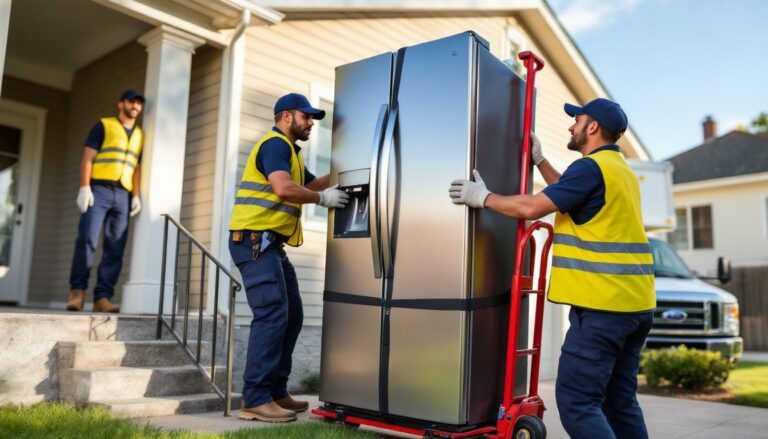
Hotpoint offers three primary configurations, each suited to different kitchen layouts and user needs. Understanding the footprint, swing clearance, and capacity differences helps avoid the common mistake of ordering a unit that won’t fit through your doorway or clear your countertop overhang.
Top-Freezer Models
Top-freezer designs remain Hotpoint’s bread and butter. Models like the Hotpoint HTH17CBDCC (16.6 cu. ft.) and HTH18GBDCC (17.6 cu. ft.) are standard 30-inch-wide units that fit most existing cutouts without modification. Actual dimensions are typically 66-67 inches tall, 29.75 inches wide, and 32-34 inches deep (including door handles), confirm depth with countertop overhang before delivery.
These models use wire shelves in the freezer and spill-proof glass shelves in the fresh food compartment. The freezer generally runs -0.4°F to 0°F, which is adequate for long-term frozen storage. One advantage: the compressor location at the bottom makes servicing easier than with bottom-freezer designs.
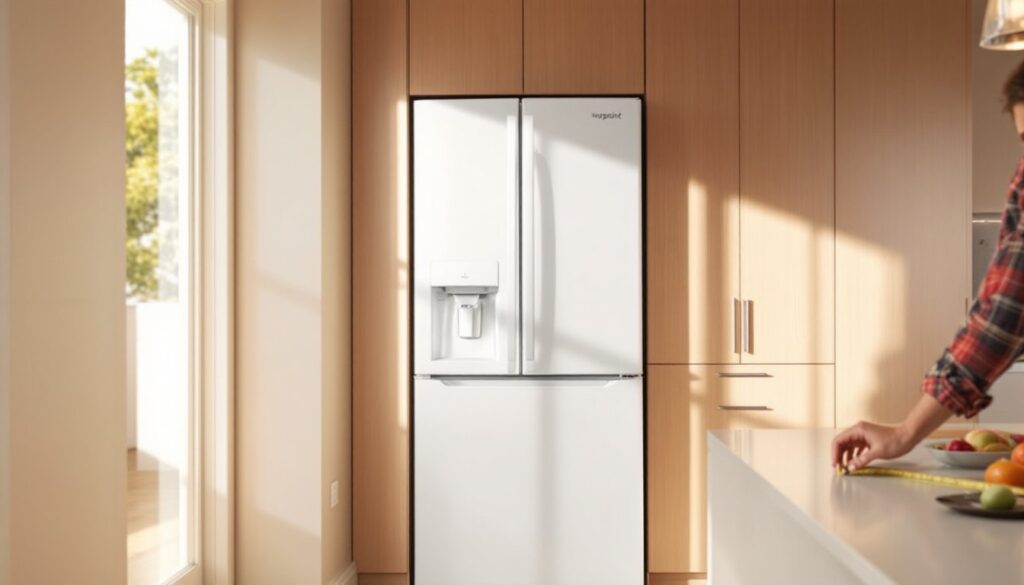
Top-freezer units require 36 inches of clearance in front for full door swing. If you’re working in a galley kitchen, measure twice, door swing into walkways is a common oversight.
Side-by-Side and French Door Options
Hotpoint’s side-by-side models (like the HSS25GFPCC) offer 25.4 cu. ft. of capacity in a 36-inch-wide footprint. These are ideal for narrow kitchens where a full-width door swing would block traffic. The trade-off: narrower shelves mean you can’t fit a full-size pizza box or sheet cake without angling it.
French door models (such as the HPS18BTDCC) combine a full-width refrigerator with a bottom pull-out freezer. This configuration puts fresh food at eye level and reduces the need to bend for everyday items. But, the bottom freezer drawer requires 24-30 inches of clearance in front to fully extend, a problem in tight spaces.
Both configurations typically include gallon door storage, LED lighting, and adjustable door bins. French door models often feature a deli drawer (sometimes called a “pantry drawer”) that runs slightly warmer than the main compartment, useful for lunchmeat and cheese that you don’t want fully chilled.
When comparing models, check the annual energy consumption listed on the EnergyGuide label. A difference of 50-100 kWh/year might seem small, but over 12 years it adds up to measurable operating cost.
Key Features to Look for in a Hotpoint Refrigerator
Not all Hotpoint models are created equal. Here’s what separates a solid purchase from a future headache:
Shelving adjustability: Look for models with slide-and-lock glass shelves that can be repositioned without tools. Fixed shelves limit your ability to store tall items like gallon jugs or layer cakes.
Crisper humidity controls: Basic models use a simple slider to adjust vent openings. High-humidity settings (vent closed) work for leafy greens: low-humidity (vent open) is better for fruits that emit ethylene gas. This isn’t revolutionary, but it’s absent on the cheapest units.
Reversible doors: Most Hotpoint fridges allow you to swap hinge sides, which is critical if your kitchen layout changes or you’re moving the unit to a different wall. Confirm this feature, some ultra-budget models have fixed hinges.
Defrost type: All current Hotpoint refrigerators use frost-free automatic defrost in the freezer. Older models or heavily discounted units might require manual defrost, which is a deal-breaker for most homeowners.
Door alarms: Mid-tier models include an audible alarm if the door is left open for more than 5 minutes. This is useful if you have kids or a habit of leaving the fridge cracked while unloading groceries.
Interior lighting: LED lighting has largely replaced incandescent bulbs, providing brighter, cooler, and more energy-efficient illumination. Bulb replacement is rare, but when it happens, LED modules can be expensive compared to a $2 incandescent bulb.
Temperature controls: Digital displays are more precise than dial controls, but they’re also one more electronic component that can fail. Dial controls are bulletproof, turn to adjust, and there’s little to break.
If you’re remodeling a kitchen and considering built-in or panel-ready options, note that Hotpoint doesn’t manufacture true built-in refrigerators. Their units are freestanding, though some homeowners successfully integrate them with custom cabinetry panels.
Installation and Maintenance Tips for Homeowners
Installing a refrigerator is straightforward, but small mistakes cause big problems. Here’s what to get right the first time.
Clearance and ventilation: Most Hotpoint models require 1 inch of clearance on each side and 2 inches at the rear for airflow around the condenser coils. Tight fits can cause overheating, which shortens compressor life and drives up energy use. If you’re working with a tight space, consider models with front-venting condensers (rare in Hotpoint’s lineup but available from other brands).
Leveling: Use a 4-foot level and adjust the front leveling legs until the unit tilts slightly backward (about 0.25 inches over 4 feet). This helps doors self-close and prevents water from pooling in the drip pan. Most units have adjustable front legs and fixed rear rollers.
Water line connection (if applicable): Hotpoint refrigerators with ice makers require a 1/4-inch OD water line connected to a nearby cold water supply. Use a saddle valve or, better, a dedicated shutoff valve installed by a plumber. Avoid piercing-type saddle valves, they’re prone to leaks and are prohibited by some plumbing codes.
Run the line through the lower rear access panel and secure it to prevent kinking. Turn on the water, check for leaks, and discard the first three batches of ice (they’ll taste like plastic and manufacturing residue).
Electrical: Refrigerators should be on a dedicated 15-amp or 20-amp circuit per NEC 422.10(A). Don’t plug into a GFCI outlet unless the circuit is specifically designed for it, nuisance trips are common. Use a three-prong grounded outlet: never use a two-prong adapter.
Routine maintenance: Clean condenser coils every 6 months using a coil brush or vacuum attachment. Coils on the rear are easier to access: bottom-mounted coils require pulling the unit out. Dirty coils reduce efficiency by 25% or more.
Replace the water filter (if equipped) every 6 months. Clogged filters restrict flow to the ice maker and can cause thin, hollow ice cubes.
Check door gaskets annually. Close the door on a dollar bill, if it pulls out easily, the gasket is worn and should be replaced. Torn or hardened gaskets let cold air escape, forcing the compressor to run longer.
Common Hotpoint Refrigerator Issues and DIY Troubleshooting
Most refrigerator problems are fixable without a service call. Here are the issues homeowners encounter most, along with fixes you can handle yourself.
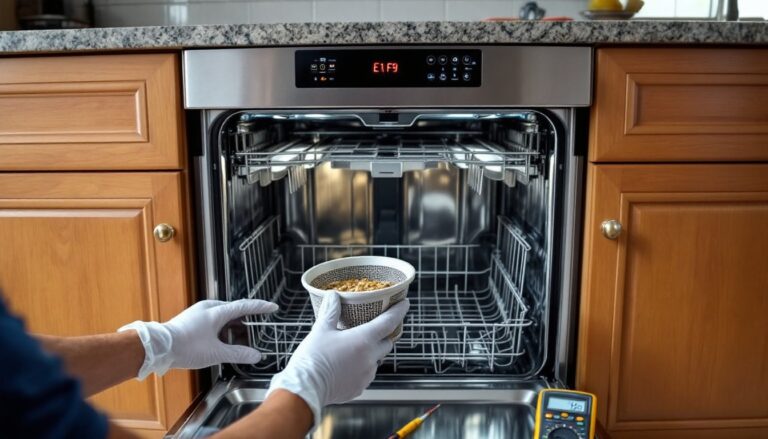
Not cooling properly: First, check the thermostat setting, it should be between 37-40°F for the fridge and 0°F for the freezer. If settings are correct, inspect the condenser coils (rear or bottom) for dust buildup. A clogged coil can’t dissipate heat, causing the compressor to cycle continuously without reaching temperature.
Next, verify the condenser fan is running. With the unit unplugged, manually spin the fan blade. If it’s stiff or doesn’t spin freely, the motor may be failing (a $50-$100 part).
If the evaporator fan (inside the freezer) isn’t running, you’ll get freezer cooling but no airflow to the fridge. Listen for fan noise when the door is closed: if silent, the fan motor likely needs replacement.
Ice maker not working: Confirm the water supply valve is open and water pressure is at least 20 psi. Low pressure prevents the fill valve from opening.
Check the fill tube (small plastic line entering the ice maker assembly) for ice blockage. A frozen fill tube prevents water from entering the mold. Thaw it with a hairdryer on low heat, don’t use high heat or you’ll crack the plastic.
If the ice maker cycles but doesn’t eject ice, the ejector arm or motor gearbox may be jammed. With power off, manually rotate the gearbox using a flathead screwdriver. If it turns freely, the motor may be faulty.
Excessive noise: A loud humming usually indicates a failing compressor or condenser fan motor. Buzzing every few minutes is normal (defrost timer or compressor starting), but constant loud noise warrants investigation.
Rattling or vibrating can be caused by the unit not being level, or by drain pan movement at the bottom. Tighten any loose screws holding the pan in place.
Water leaking inside: This typically means the defrost drain is clogged. Locate the drain hole at the back of the fridge compartment (often hidden behind the crisper drawers). Flush it with warm water and a turkey baster, or use a length of 1/4-inch flexible tubing to clear the blockage.
If water pools under the crisper drawers, the drain might be frozen. Unplug the unit for several hours to allow it to thaw, then flush the drain.
Door not sealing: Clean the door gasket with warm soapy water, grease and food residue prevent proper sealing. If the gasket is torn or permanently deformed, replacement gaskets are available for $30-$80 depending on the model. Installation requires loosening the door liner screws (usually Phillips-head) and tucking the new gasket into the retaining channel.
For more complex repairs, compressor replacement, refrigerant leaks, or control board failures, call a licensed appliance technician. These repairs often cost $200-$500, and on an older unit, replacement may be more economical.
When evaluating whether to repair or replace, consider the 50% rule: if repair costs exceed half the price of a comparable new unit, replacement is usually smarter. For appliance guidance and comparison shopping, homeowners often turn to trusted resources that detail cost-benefit analysis for aging appliances. Similarly, those redesigning kitchen layouts around new appliances can find dimensional planning tools and real-world installation case studies that go beyond manufacturer spec sheets.