Table of Contents
ToggleCleaning floors used to mean hauling out two separate machines, one to vacuum, another to mop. That’s changing fast. Cordless vacuum mops combine both functions in one lightweight unit, letting homeowners tackle dust, debris, and sticky spills in a single pass. No outlet hunting, no tangled cords, and no switching equipment mid-task.
These hybrid cleaners have evolved significantly over the past few years. Battery technology has improved, suction motors have shrunk without losing power, and mopping systems now use rotating pads or spray jets instead of dragging a damp cloth. For busy households juggling pet hair, kitchen spills, and high-traffic areas, a best cordless vacuum mop combo can cut floor-cleaning time in half. But not all models deliver on their promises. Choosing the right one means understanding how they work, what features matter, and which floor types they handle best.
Key Takeaways
- A cordless vacuum mop combines vacuuming and mopping functions in one battery-powered machine, reducing floor-cleaning time by up to 15-20 minutes per session with no cords or outlet hunting.
- Battery runtime and suction power are critical factors—aim for at least 25-35 minutes of runtime and 15-20 air watts of suction for effective cleaning of 1,000-1,500 square feet.
- Cordless vacuum mops work best on sealed hardwood, tile, and luxury vinyl plank, while laminate and natural stone require caution or manufacturer approval to avoid water damage.
- Water flow control and self-cleaning cycles are essential features that maintain cleaning effectiveness and prevent mold buildup between uses.
- Proper maintenance—emptying the dirty water tank after each use, cleaning brush rollers regularly, and storing the machine with batteries at 40-80% charge—extends the lifespan of your cordless vacuum mop.
- A two-tank design with water-recovery system removes soiled water during cleaning, delivering cleaner results with fewer streaks compared to traditional mopping methods.
What Is a Cordless Vacuum Mop and How Does It Work?
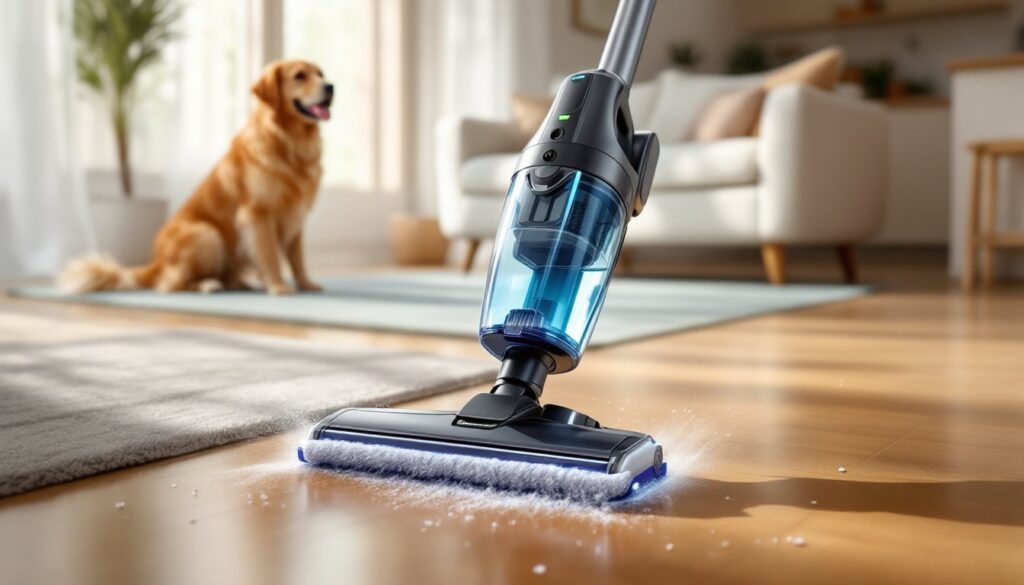
A cordless vacuum mop is a floor-cleaning appliance that vacuums and mops simultaneously, powered by a rechargeable battery. Unlike traditional stick vacuums or spin mops, these machines use dual cleaning mechanisms: a motorized brush roll or suction inlet to pick up dry debris, and a water delivery system to mop hard floors in the same motion.
Most models feature a two-tank design. One reservoir holds clean water (often mixed with a cleaning solution), while a second tank collects dirty water and debris. As the user pushes the unit forward, the vacuum function lifts dirt and pet hair into the debris tank, while rotating microfiber pads or rollers distribute clean water and scrub the floor. The dirty water is then suctioned back into the waste tank, leaving floors cleaner and drier than traditional mopping.
Some vacuum and mop combo cordless units use a spray-and-scrub method: a trigger or automatic sensor releases cleaning solution onto the floor, and rotating pads agitate the surface. Others employ a continuous-flow system where water is constantly fed to the cleaning head. The key difference from a regular stick vacuum with a mop attachment is integration, these machines are engineered to do both tasks at once, not as an afterthought add-on.
Battery-powered operation means no cord radius limits. Users can move freely between rooms, tackle stairs (depending on the model’s weight), and store the unit without looking for an outlet. Most cordless vacuum mops run on lithium-ion batteries ranging from 18V to 36V, with charge times between two and four hours.
Key Benefits of Using a Cordless Vacuum Mop in Your Home
The primary advantage is time savings. Instead of vacuuming first, then filling a bucket and mopping, homeowners complete both tasks in one pass. For a typical 1,200-square-foot home with hardwood and tile floors, that can shave 15 to 20 minutes off weekly cleaning routines.
Cord-free mobility eliminates the hassle of unplugging and re-plugging between rooms. This matters most in open-concept homes or spaces with limited outlets. Users can start in the kitchen, move through the dining area, and finish in the bathroom without interruption.
Cleaner results often come from the water-recovery system. Traditional mopping spreads dirty water around: a vacuum mop’s dual-tank design continuously removes soiled water, reducing streaks and residue. Homes with frequent messes and spills benefit most, especially households with young children or pets.
Less physical strain is another benefit. Most cordless vacuum mops weigh between 9 and 15 pounds, lighter than lugging a full mop bucket and vacuum separately. Self-propelled models reduce pushing effort, and swivel heads navigate around furniture with minimal bending or reaching.
Storage efficiency appeals to homeowners with limited closet space. One compact unit replaces a stick vacuum, mop, bucket, and cleaning caddy. Many models include wall-mounted docks that charge the battery and drain the dirty water tank simultaneously.
Finally, versatility across surfaces makes these tools practical for mixed flooring. Most handle sealed hardwood, laminate, tile, vinyl, and low-pile area rugs without switching heads or settings.
Essential Features to Look for When Shopping
Choosing the best cordless mop vacuum means balancing performance, runtime, and ease of use. Here are the non-negotiables.
Battery Life and Runtime Considerations
Runtime determines how much square footage the machine can clean on a single charge. Entry-level models offer 15 to 20 minutes, enough for small apartments or quick spot-cleaning. Mid-range units run 25 to 35 minutes, suitable for 1,000 to 1,500 square feet. High-capacity models push 40 to 60 minutes, handling larger homes or multi-level cleaning without recharging.
Pay attention to battery type and voltage. Lithium-ion batteries hold charge longer and don’t suffer from memory effect. Higher voltage (25V to 36V) typically delivers stronger suction and longer runtime, but adds weight. Some manufacturers offer swappable batteries, a useful feature if cleaning time regularly exceeds runtime.
Charge time varies from two to five hours. Fast-charge models reach full capacity in under three hours, which matters for households cleaning multiple times per week. Check if the charger has overcharge protection: cheaper units can degrade battery life if left plugged in constantly.
Look for battery indicators. LED displays showing remaining runtime or charge percentage help users plan cleaning sessions and avoid mid-task shutdowns. Some models slow down or reduce suction when the battery drops below 20%, which can leave floors partially cleaned.
Suction Power and Mopping Performance
Suction power is measured in air watts (AW) or pascals (Pa). For effective debris pickup on hard floors, look for at least 15-20 AW or 8,000-12,000 Pa. Less powerful units struggle with cereal crumbs, kitty litter, or dirt tracked in from outside.
Brush roll design impacts both vacuuming and mopping. Dual-roller systems excel at lifting embedded dirt from grout lines and textured tile. Single rollers work fine on smooth surfaces like sealed hardwood or vinyl plank. Some models use soft microfiber rollers that won’t scratch delicate floors: others use stiffer nylon bristles for scrubbing power.
Water flow control separates good models from great ones. Adjustable settings let users apply more water to sticky kitchen floors and less to water-sensitive laminate. Automatic sensors that detect floor type and adjust flow accordingly are a premium feature, but they’re not always accurate. Manual control offers more reliability.
Check the clean water tank capacity. Tanks under 0.5 liters require frequent refills in larger homes. Capacities between 0.6 and 0.9 liters strike a good balance between runtime and weight. Dirty water tanks should be slightly larger to handle debris volume without clogging.
Self-cleaning cycles are increasingly common. These programs flush the brush rollers and internal tubing with clean water, reducing mildew and odor buildup. Models without this feature require manual disassembly and rinsing after every few uses, an extra chore many users skip, leading to performance decline.
Best Floor Types for Cordless Vacuum Mops
Sealed hardwood and engineered wood are ideal candidates. The vacuum function removes grit that can scratch the finish, while the mop function uses minimal water, key for wood floors sensitive to moisture. Always verify the manufacturer specifies hardwood compatibility and check that water output can be dialed down.
Tile and grout benefit most from rotating brush action. Stiff rollers scrub grout lines effectively, and the suction removes dirty water before it re-settles. For heavily soiled grout, a cordless vacuum mop won’t replace a dedicated grout brush and cleaner, but it maintains cleanliness between deep scrubs.
Luxury vinyl plank (LVP) and sheet vinyl handle these machines well. Both are waterproof and durable. Just avoid excessive water application, which can seep into seams or edges and damage the subfloor. Many homeowners appreciate advice from experts at home improvement resources when selecting flooring-specific cleaning methods.
Laminate flooring requires caution. Most laminate is water-resistant, not waterproof. Use the lowest water setting and avoid letting the mop sit in one spot. If the laminate lacks a moisture barrier or has damaged seams, skip the mopping function entirely and use vacuum-only mode.
Low-pile rugs and mats work on some models, but check specs. Units with a vacuum-only mode can switch off the water system and function as a stick vacuum. High-pile carpet, shag rugs, and area rugs over 0.5 inches thick will clog the brush roll or stall the motor.
Not recommended for: unsealed wood, waxed floors, natural stone (marble, travertone) without manufacturer approval, cork, or any surface the flooring manufacturer advises against wet-mopping. When in doubt, consult your flooring warranty or refer to guidelines from trusted home care authorities.
Maintenance Tips to Keep Your Cordless Vacuum Mop Running Smoothly
Empty the dirty water tank after every use. Leaving it overnight breeds bacteria and causes odors. Rinse the tank with warm water and let it air-dry before reassembling. Some tanks are dishwasher-safe (top rack only), but check the manual, heat can warp plastic seals.
Clean or replace brush rollers regularly. Hair, string, and debris wrap around rollers and reduce scrubbing efficiency. Most models feature tool-free roller removal. Pull the roller out, cut away tangled fibers with scissors, and rinse under running water. Replace rollers every three to six months, depending on usage. Worn microfiber loses absorbency: degraded nylon bristles won’t scrub effectively.
Run the self-cleaning cycle (if available) after each use. If your model lacks this feature, manually flush the system: fill the clean water tank with plain water, run the machine on a towel or in the sink for 30 seconds, then empty and rinse both tanks. This prevents mineral buildup and mold in the internal tubing.
Use manufacturer-recommended cleaning solutions. Off-brand or DIY vinegar mixes can void warranties or damage seals and gaskets. Most brands sell proprietary formulas: they’re often overpriced, but they’re pH-balanced for the machine’s components. If you prefer third-party solutions, verify they’re safe for vacuum mops.
Check and clean filters monthly. Clogged filters reduce suction and strain the motor. Most filters are washable foam or mesh. Remove, rinse under cool water until the runoff is clear, and let dry completely (24 hours) before reinstalling. Replace filters every six to twelve months, or when they show tears or permanent discoloration.
Store the unit properly. Use the manufacturer’s wall dock or stand to keep the machine upright and allow tanks to drain fully. Don’t store it with water in the tanks, stagnant water promotes mold. Keep the battery charged between 40% and 80% for long-term storage: fully draining or constantly topping off lithium-ion batteries shortens their lifespan.
Inspect seals and gaskets. Cracked or brittle seals cause leaks and reduce suction. Most are replaceable, and manufacturers sell maintenance kits. Check seals every few months, especially if you notice water leaking during operation or reduced vacuuming power.