Table of Contents
ToggleThe master bathroom vanity sets the tone for the entire space. It’s where function meets form, storage, sink(s), countertop, and often plumbing all come together in one hefty piece of cabinetry. Unlike a powder room vanity or a basic hall bath setup, the master bath version handles daily routines for two people, demands more counter space, and typically anchors a larger room with stronger design intent. Getting it right means balancing dimensions, materials, storage needs, and installation realities. This guide walks through the decisions that matter, from footprint and finish to framing and budget.
Key Takeaways
- A master bathroom vanity typically measures 60 to 84 inches wide with comfort-height sizing at 34 to 36 inches to accommodate dual users and reduce back strain.
- Double vanities are the standard expectation for master baths in homes over 2,000 square feet, though single vanities work well in smaller spaces or when prioritizing other bathroom features.
- Proper installation of a master bathroom vanity requires shimming for level floors, secure mounting to wall studs or blocking for floating models, and adherence to plumbing codes including GFCI protection and correct drain venting.
- Material quality significantly impacts durability and cost—solid wood and plywood boxes with hardwood frames last longer than MDF, while quartz countertops offer the best balance of low maintenance and resale value.
- Functional storage features like soft-close hardware, full-extension drawer glides, hampers, and integrated lighting transform a master bathroom vanity from basic sink cabinetry into a furniture-like fixture that streamlines daily routines.
- Budget for the best master bathroom vanity your finances allow, expecting $400–$800 for stock models, $1,200–$2,500 for semi-custom options, and additional costs for quality countertops, faucets, and professional installation.
What Makes a Master Bathroom Vanity Different?
A master bathroom vanity differs from smaller vanities in scale, storage capacity, and user expectations. Most measure 60 to 84 inches wide, compared to 24 to 48 inches in secondary baths. The larger footprint accommodates double sinks, which are standard in most master suites built after 1990.
Counter depth typically runs 21 to 22 inches, slightly deeper than kitchen counters, to support undermount sinks and give elbow room during grooming. Height has shifted over the years, older vanities sit at 30 to 32 inches, while modern “comfort height” models land at 34 to 36 inches, matching kitchen base cabinets and reducing back strain.
Master vanities also handle more plumbing complexity. Two sinks mean two P-traps, two supply lines, and careful drain routing to avoid conflicts with drawer boxes. Many include electrical outlets built into the cabinet or countertop for hair tools, electric razors, and toothbrushes. GFCI protection is required by the National Electrical Code (NEC) for receptacles within six feet of a water source.
Drawer and door configuration matters more in a master setup. Couples need separate zones, his-and-hers drawers, dedicated cosmetic storage, pull-out hampers, or tilt-out trays for small items. A well-designed master vanity functions like a piece of furniture, not just a sink base.
Choosing the Right Vanity Size and Configuration
Measure the space carefully before shopping. The International Residential Code (IRC) requires at least 30 inches of clear floor space in front of the vanity, more if the bathroom serves as an accessible fixture per ADA guidelines. Leave 4 inches minimum of wall space on either side if the vanity sits between walls, and account for door swings, shower enclosures, and toilet clearance.
For master bathroom design layouts, the vanity often dictates the rest of the floor plan. Standard widths come in 6-inch increments: 60, 66, 72, or 84 inches. Custom builds allow for odd dimensions, but they cost more and extend lead times.
Counter overhang affects usable width. A 60-inch vanity with a 1-inch overhang on each side gives 58 inches of cabinet box. If mounting two sinks, each basin needs 30 to 36 inches of width for comfortable use. Anything tighter feels cramped.
Single vs. Double Vanity: Which Is Right for You?
Double vanities suit couples who get ready at the same time. They eliminate the morning bottleneck and give each person dedicated counter and storage. The tradeoff is space, a double setup eats up at least 60 inches of wall, and often more if drawers or hampers flank the sinks.
Single vanities work in narrower rooms or for homeowners who prioritize other features, like a larger shower or freestanding tub. A 48 to 60-inch single vanity still offers plenty of counter space and can include a sit-down makeup area or open shelving.
Resale matters. Most buyers expect double sinks in a master bath, especially in homes over 2,000 square feet. A single vanity won’t kill a sale, but it may limit appeal in competitive markets. If the room can handle it, a double vanity usually pays off.
Popular Master Bathroom Vanity Styles and Materials
Freestanding vanities sit on legs or a plinth base, with visible floor underneath. They feel more like furniture and simplify floor tile installation, since tile runs wall-to-wall. Cleaning under them is easier, but they offer less storage than a full-height cabinet.
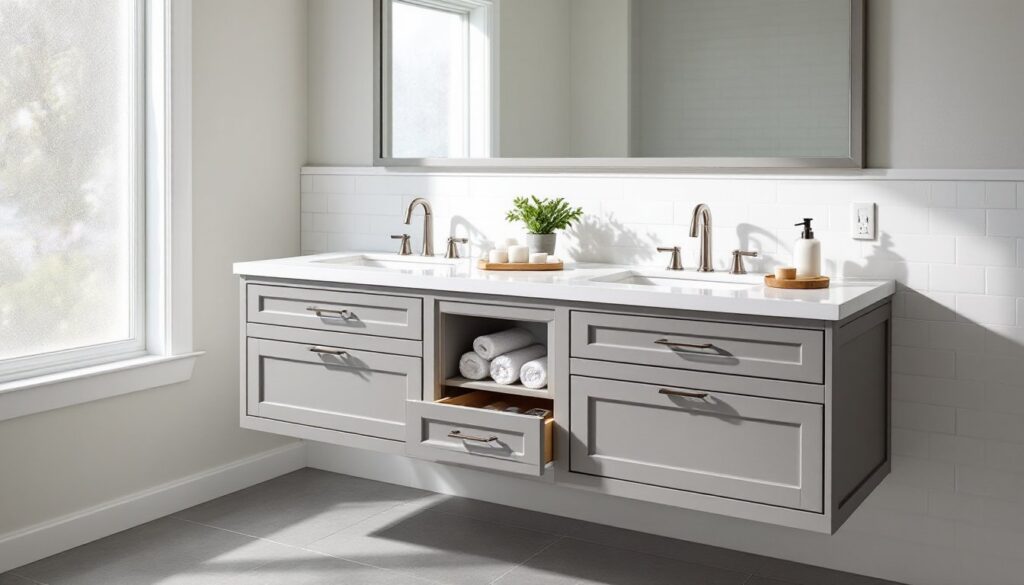
Floating vanities mount to the wall with no base touching the floor. They create a sleek, modern look and make small bathrooms feel larger. Installation requires blocking or solid backing behind the drywall, typically 2×6 or 2×8 lumber between studs. The vanity must fasten to this blocking, not just drywall, to support the weight of the cabinet, countertop, and sinks. Plumbing stays visible unless you box it in.
Built-in vanities extend from floor to ceiling or integrate with surrounding tile and cabinetry. They maximize storage and suit traditional or transitional styles but complicate future remodels.
Material choice impacts durability and cost. Solid wood (maple, oak, cherry) handles moisture well if properly sealed, but costs more. MDF or particleboard with melamine or thermofoil veneer is budget-friendly but vulnerable to water damage at joints and edges. Plywood boxes with hardwood face frames split the difference, strong, stable, and mid-range in price.
Countertops vary widely. Quartz dominates the market for good reason: non-porous, low-maintenance, and available in dozens of colors. Granite remains popular but requires periodic sealing. Marble looks elegant but stains and etches easily, not ideal near hair dye or acidic cleaners. Solid-surface materials like Corian offer seamless sink integration and easy repairs.
Storage Solutions and Functional Features
Master bath vanities should do more than hold a sink. Look for soft-close hinges and drawer glides, they prevent slamming and last longer than standard hardware. Full-extension glides let drawers open completely, so items in the back stay accessible.
Drawer dividers and pull-out organizers keep small items from becoming a jumbled mess. Dedicated slots for hair tools, makeup, or shaving gear make daily routines faster. Some vanities include built-in electrical strips inside drawers for charging or plugging in tools without visible cords.
Hampers and tilt-out trays hide laundry or trash inside the cabinet. A pull-out hamper with a removable bag saves trips to the bedroom and keeps dirty clothes out of sight.
Open shelving below the countertop works for decorative storage, baskets, rolled towels, or plants, but collects dust and offers no concealment for less photogenic items. Balance open and closed storage based on how tidy the household stays.
Toe-kick drawers use the 4-inch space at the base of the cabinet for flat items like bath mats, cleaning supplies, or extra toiletries. They’re a smart add-on if budget allows.
Consider lighting integrated into the vanity or mirror. LED strips under wall-mounted cabinets or behind mirrors eliminate shadows on faces and add a modern touch. Wire them to a dimmer for adjustable brightness.
Installation Considerations for Your Master Bath
Installing a master vanity isn’t a beginner project, but a confident DIYer with plumbing and carpentry experience can handle it. Expect to spend a full weekend if replacing an existing vanity, longer if running new supply lines or moving drains.
Shut off water at the fixture valves or main line before disconnecting the old vanity. Place a bucket under P-traps, there’s always residual water. If the old vanity is caulked or grouted to the wall or floor, score the joint with a utility knife to avoid tearing drywall or tile.
Check the wall for level and plumb before mounting the new unit. Bathrooms settle, and floors rarely run perfectly flat. Shim the vanity as needed to prevent rocking and ensure doors and drawers operate smoothly. For floating vanities, locate studs and install blocking if it’s not already present. Use 3-inch wood screws through the cabinet back into studs or blocking, toggle bolts and drywall anchors won’t support the weight.
Plumbing hookups should follow local code. Use braided stainless steel supply lines rather than old-style copper or plastic, they’re easier to install and less prone to kinking. P-traps must maintain a 2 to 4-inch water seal and vent properly to prevent sewer gas from entering the room. If you’re unsure about drain slope or venting, call a licensed plumber. Most jurisdictions require a plumbing permit for new fixture installations or significant drain modifications.
Seal the vanity to the wall with silicone caulk, not latex. Silicone stays flexible and resists mold better in wet environments. Run a thin bead along the backsplash and smooth it with a wet finger or caulk tool.
Many manufacturers offer resources for installation, and renovation guides often break down the process with photos and troubleshooting tips.
Budget Planning: What to Expect When Shopping
Master bathroom vanity costs vary widely based on size, material, and features. A basic 60-inch stock vanity with cultured marble top runs $400 to $800 at big-box stores. Semi-custom options with better materials, soft-close hardware, and more finish choices land in the $1,200 to $2,500 range. Fully custom builds, especially with furniture-grade wood, decorative legs, or unique dimensions, can exceed $5,000 before countertops.
Countertops add significantly to the budget. Quartz costs $50 to $100 per square foot installed, depending on edge profile and brand. Granite runs $40 to $75 per square foot. Marble starts around $60 per square foot and climbs quickly for premium slabs. Laminate offers the lowest cost, $20 to $40 per square foot, but doesn’t hold resale value as well.
Faucets and sinks can quietly inflate costs. A pair of decent widespread faucets costs $150 to $300 each. Undermount sinks in porcelain or vitreous china run $75 to $200 each. Vessel sinks and waterfall faucets look striking but often require custom countertop cutouts and extra plumbing adjustments.
Installation labor, if hiring out, typically costs $300 to $600 for a straightforward swap, more if plumbing or electrical work is needed. Permit fees vary by jurisdiction but average $50 to $150 for bathroom remodels involving new fixtures.
Budget 10–15% extra for unexpected issues: rotted subfloor, outdated plumbing that doesn’t meet code, or walls that aren’t square. Older homes rarely cooperate fully. For inspiration and real-world examples, home design resources showcase a range of budgets and styles.
Buy the best vanity the budget allows. It’s a high-use fixture that sets the visual tone for the room. Skimping on quality means facing repairs or replacement sooner than expected.