Table of Contents
ToggleRefrigerator water filters don’t get much glory until you taste water that’s been sitting in a neglected filter for months. Then suddenly, that small cartridge tucked in the back of your fridge becomes a lot more important. The HAF-QIN refrigerator water filter is one of the most common aftermarket replacement filters on the market, designed to fit a wide range of brands and models. But understanding what it does, how to install it, and when to swap it out can mean the difference between crisp, clean water and a mouthful of chlorine or sediment.
Key Takeaways
- HAF-QIN refrigerator water filters use activated carbon block technology to reduce chlorine, lead, sediment, and volatile organic compounds, improving both taste and water quality.
- Replace your HAF-QIN filter every six months or 300 gallons—whichever comes first—and watch for warning signs like slower water flow, bad taste, or cloudy ice.
- Installation requires no tools: simply twist the old filter counterclockwise, insert the new HAF-QIN cartridge, twist clockwise until it locks, and flush 2–3 gallons of water through the system.
- The HAF-QIN is compatible with Samsung, LG, Kenmore, and Frigidaire models, but verify your refrigerator’s part number before purchasing to avoid leaks or poor fit.
- Maintain peak filter performance by flushing after installation, checking water pressure (30–120 psi), inspecting supply lines annually, and storing replacement filters in cool, dry conditions.
- Don’t extend filter life beyond its rated capacity—expired filters allow contaminants like bacteria, lead, and chlorine byproducts to pass through even if water tastes normal.
What Is the HAF-QIN Refrigerator Water Filter?
The HAF-QIN is an aftermarket refrigerator water filter cartridge built to replace OEM (original equipment manufacturer) filters in select Samsung, LG, Kenmore, and other refrigerator brands. It’s a third-party option that typically costs less than the branded version but still meets NSF/ANSI certification standards for contaminant reduction.
Most HAF-QIN filters use activated carbon block filtration, which reduces chlorine taste and odor, sediment, lead, mercury, benzene, and certain volatile organic compounds (VOCs). The carbon media is compressed into a dense block, forcing water through tiny pores that trap impurities while allowing clean water to pass.
Capacity is usually rated at 300 gallons or six months, whichever comes first. That’s based on average household use, about 1.6 gallons per day. If you’re filling water bottles, cooking with filtered water, or running a household of five, you’ll hit that 300-gallon mark faster than six months.
Unlike pitcher filters or under-sink systems, refrigerator filters are inline units. Water flows from your home’s supply line, through the filter, and into the dispenser or ice maker. No electricity, no drain line, no separate faucet. Just a twist-and-lock cartridge that sits in a housing inside the fridge.
Why Your Refrigerator Water Filter Matters for Home Health
Municipal water treatment does a solid job of killing pathogens, but it doesn’t remove everything. Chlorine and chloramine are added for disinfection, and they linger in your tap water. Old pipes can leach lead or copper. Agricultural runoff introduces nitrates and pesticides. A refrigerator filter won’t solve every water quality issue, but it addresses the most common taste, odor, and contaminant concerns.
Activated carbon filters excel at removing chlorine, which is responsible for that swimming-pool smell and metallic taste. They also reduce lead, a neurotoxin that’s especially harmful to children and pregnant women. If your home was built before 1986 or you live in an area with aging infrastructure, lead is a real concern.
Some HAF-QIN models are certified to reduce cysts like Giardia and Cryptosporidium, which can survive chlorine treatment and cause gastrointestinal illness. That certification matters, it means the filter has been tested by an independent lab, not just the manufacturer.
Ice cubes made from unfiltered water can trap sediment and off-flavors. Over time, you’ll notice cloudy ice or a funky taste in your iced coffee. A fresh filter keeps ice clear and neutral-tasting, which is a small but noticeable quality-of-life upgrade.
One caveat: refrigerator filters don’t soften water. If you have hard water (high calcium and magnesium), you’ll still see scale buildup on faucets and in appliances. That requires a whole-house water softener or a dedicated treatment system.
How to Install a HAF-QIN Water Filter in Your Refrigerator
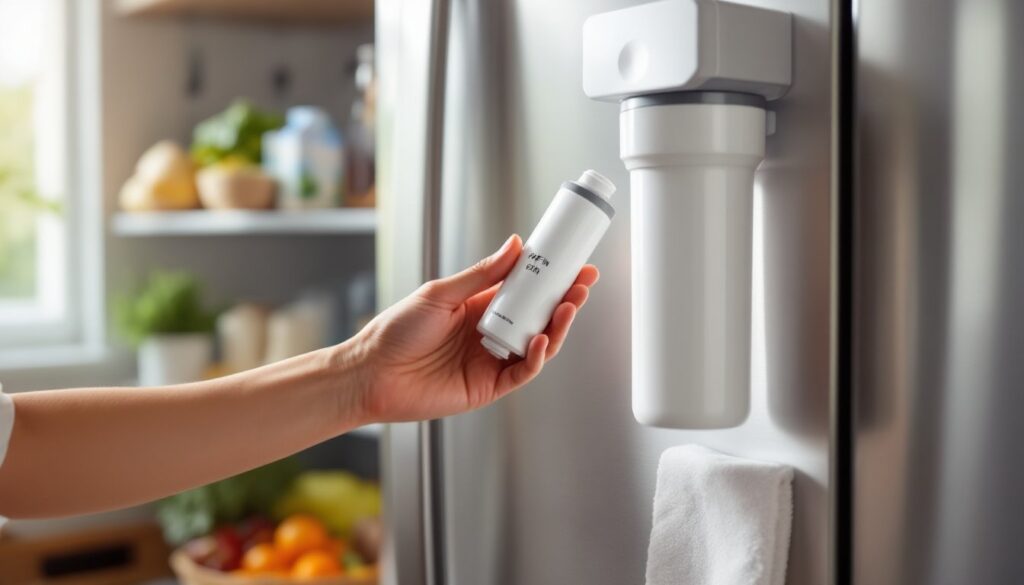
Installing a HAF-QIN filter is one of the simplest refrigerator maintenance tasks you can do. No tools required, just your hands and maybe a towel for drips.
Before you start:
- Locate the filter housing. On most models, it’s inside the fridge (upper-right corner or back wall) or in the base grille at the bottom. Check your owner’s manual if you’re not sure.
- Have a towel or shallow pan handy. A small amount of water will drip when you remove the old filter.
Step-by-step installation:
- Turn off the ice maker (optional but reduces the chance of water flow during the swap). Some people skip this: it’s not strictly necessary.
- Remove the old filter. Most HAF-QIN-compatible housings use a quarter-turn twist-lock or a push-button release. Twist counterclockwise or press the button and pull straight out. Expect a few ounces of water to spill.
- Remove the cap from the new HAF-QIN filter. Some models have a protective cover on both ends, remove them before installing.
- Align the filter with the housing. Look for the arrow or alignment mark on the cartridge. Insert it straight in, then twist clockwise (usually about 90 degrees) until it locks. You should feel or hear a click.
- Flush the filter. Run 2–3 gallons of water through the dispenser to clear out carbon fines (loose carbon particles). The first few glasses will look cloudy or grayish, that’s normal. Discard this water.
- Reset the filter indicator light (if your fridge has one). Hold the reset button for 3–5 seconds until the light changes color or turns off. Consult your manual for the exact procedure.
If water leaks from the housing after installation, the filter may not be fully seated. Remove it and reinstall, making sure it clicks into place. If leaking persists, check for a damaged O-ring or housing crack, that’s rare but can happen with older fridges.
Some refrigerator models require you to bypass the filter if you’re not using one. A bypass plug usually comes with the fridge or can be ordered separately. Running the fridge without a filter or a bypass plug can cause low water pressure or damage to the dispenser system.
When to Replace Your HAF-QIN Filter: Signs and Schedule
The general rule: every six months or 300 gallons, whichever comes first. But real-world usage varies, and there are physical signs that tell you it’s time for a swap.
Filter indicator light: Most modern refrigerators have a light that changes color, green to yellow to red, as the filter ages. Red means replace now. If your fridge doesn’t have a light, set a recurring reminder on your phone.
Slower water flow: If the dispenser takes noticeably longer to fill a glass, the filter is clogged with sediment. This is common in areas with hard water or high sediment load. Don’t wait, a clogged filter can strain the dispenser pump.
Bad taste or odor: If your water starts tasting like chlorine, metal, or earth, the activated carbon is saturated. It can’t absorb more contaminants, so they’re passing through untreated.
Cloudy or discolored ice: This can indicate a spent filter or sediment buildup in the water line. Try replacing the filter first. If the problem persists, the issue may be upstream in your plumbing.
Visible sediment or particles: If you see flecks or grit in your water, the filter is either clogged or failing. Replace it immediately.
Heavy users, large families, households that cook with filtered water, or those who entertain often, should track gallons dispensed if possible. Some smart fridges log usage. If yours doesn’t, a flow meter on the fridge’s supply line can give you a precise count, but that’s overkill for most people.
Don’t try to extend filter life by flushing it or soaking it. Once the carbon is saturated, it’s done. Running water through an expired filter won’t clean it, it just lets contaminants through.
Compatible Refrigerator Models and Brands
The HAF-QIN filter is designed as a direct replacement for several OEM filters, particularly Samsung’s HAF-CIN and HAF-QIN models. It also fits select LG, Kenmore, and Frigidaire units. Compatibility depends on the filter housing design, not the brand name on the fridge door.
Common OEM filter part numbers replaced by HAF-QIN:
- Samsung: DA29-00020B, HAF-CIN/EXP, DA97-08006A
- LG: LT700P (in some cases, verify housing type)
- Kenmore: 46-9690, 9690
Before ordering, check your refrigerator’s model number and cross-reference it with the HAF-QIN packaging or manufacturer’s compatibility list. The model number is usually on a sticker inside the fridge door or on the back wall.
Some refrigerator water filters are brand-specific and won’t interchange, even if they look similar. The housing design, O-ring size, and filter threading must match exactly. Installing the wrong filter can cause leaks, low pressure, or damage to the dispenser.
If you’re unsure, snap a photo of your old filter (with the part number visible) and compare it to product images online. Most reputable sellers list compatible models in the product description.
Some refrigerators use inline filters installed on the water supply line behind or beneath the unit. These are not compatible with HAF-QIN cartridges, which are designed for internal twist-lock housings.
Maintenance Tips to Maximize Filter Performance
A refrigerator water filter is low-maintenance, but a few habits will keep it working efficiently and extend the life of your appliance.
Flush the system after installation. Those first 2–3 gallons wash out carbon fines and trapped air. Skipping this step can leave black specks in your water and ice.
Replace on schedule, not when convenient. It’s tempting to stretch a filter to seven or eight months, especially if water still tastes fine. But contaminant reduction degrades even if you can’t taste the difference. Independent testing by cleaning experts shows that expired filters can harbor bacteria and allow lead or chlorine byproducts to pass through.
Check your home’s water pressure. Refrigerators need 30–120 psi for proper dispenser and ice maker function. Pressure below 30 psi can cause slow flow or incomplete ice cube formation. Pressure above 120 psi can damage the filter housing or cause leaks. Install a pressure regulator at the shutoff valve if needed.
Inspect the water supply line annually. Most fridges use a 1/4-inch braided stainless steel or copper line. Look for kinks, corrosion, or bulging. Replace damaged lines immediately, a burst line can flood your kitchen.
Clean the dispenser nozzle. Mineral deposits and mold can build up on the exterior nozzle. Wipe it down monthly with a vinegar solution or mild cleaner. Some nozzles are removable for deep cleaning.
Consider a whole-house sediment filter if you’re on well water or have visible sediment in your tap water. This pre-filters heavy particles before they reach the fridge, reducing strain on the HAF-QIN filter and extending its effective life.
Don’t store replacement filters in a hot garage or damp basement. Heat and moisture can degrade the activated carbon before you even install the filter. Keep them in a cool, dry place, inside a kitchen cabinet works fine.
Conclusion
Swapping a refrigerator water filter isn’t glamorous, but it’s one of the simplest ways to improve what your family drinks every day. The HAF-QIN filter offers a cost-effective, certified alternative to OEM cartridges without sacrificing performance, if you install it correctly and replace it on schedule. Stay on top of the six-month replacement cycle, flush the system after every install, and pay attention to taste and flow changes. Your water, and your ice cubes, will thank you.