Table of Contents
ToggleMost people treat their refrigerator like a cold closet, jam in the groceries wherever there’s space and hope for the best. But vertical placement in your fridge isn’t just about organization: it’s a critical food safety practice that prevents cross-contamination and reduces the risk of foodborne illness. The golden rule? Ready-to-eat foods always go above raw items. This hierarchy exists because liquids drip downward, and raw meat juices carry bacteria like Salmonella and E. coli that can contaminate anything below. Understanding the proper refrigerator storage order protects your household and extends the shelf life of your groceries.
Key Takeaways
- Ready-to-eat foods should always be stored above raw proteins in your refrigerator to prevent dangerous cross-contamination from dripping meat juices carrying bacteria like Salmonella and E. coli.
- Proper refrigerator storage hierarchy from top to bottom is: ready-to-eat foods, dairy and eggs on middle shelves, and raw meat on the bottom shelf in sealed containers.
- The top shelf is ideal for leftovers, deli meats, cooked proteins, and prepared meals, while the bottom shelf must be reserved exclusively for raw meat, poultry, and seafood to maintain food safety.
- Refrigerator temperature should be maintained at or below 40°F, and common storage mistakes like storing raw chicken above vegetables or using the door for milk significantly increase foodborne illness risk.
- Label all leftovers with dates, use the ‘first in, first out’ method for rotation, and never reuse containers or plates that held raw meat for cooked food without hot soapy water washing to prevent contamination.
Understanding the Refrigerator Storage Hierarchy
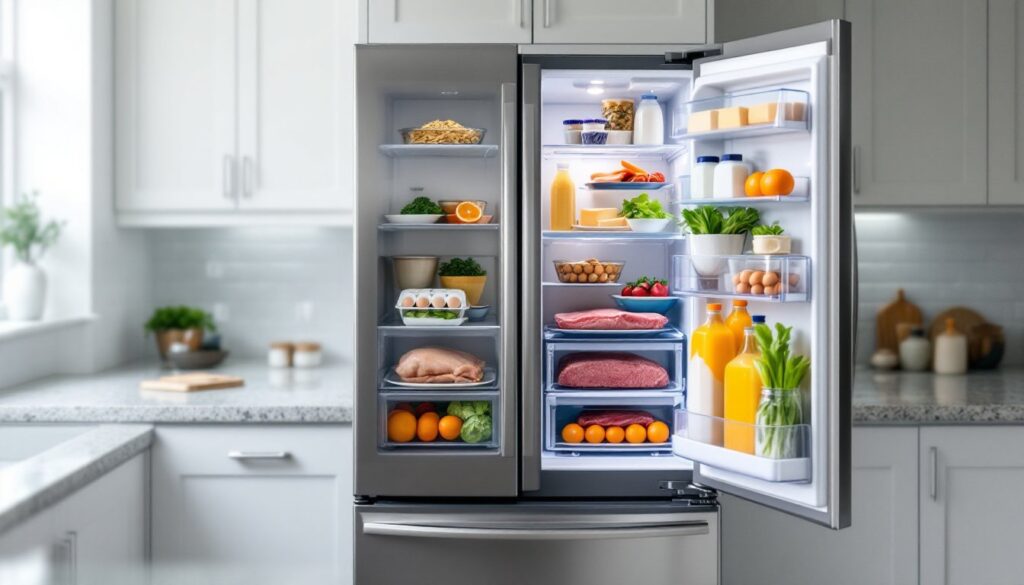
The refrigerator storage hierarchy follows a simple principle: cooked and ready-to-eat foods go up top, raw proteins go on the bottom. This system aligns with both FDA Food Code recommendations and basic gravity.
Temperature zones play a secondary role. Most modern refrigerators maintain 35°F to 38°F throughout, but the bottom shelf tends to run slightly colder, ideal for raw meat that needs to stay at or below 40°F. The top shelves experience minor temperature fluctuations when the door opens, making them better for foods you’ll consume quickly.
The order from top to bottom should be:
• Top shelf: Ready-to-eat foods, leftovers, drinks, and prepared meals
• Middle shelves: Dairy products, eggs, and prepared ingredients
• Bottom shelf: Raw meat, poultry, and seafood in sealed containers
• Drawers: Fruits and vegetables (separated when possible)
• Door: Condiments, juices, and other high-acid or high-salt items
This arrangement prevents the most dangerous scenario: raw animal protein dripping onto foods that won’t be cooked before eating. Even a small amount of contaminated liquid can cause illness, and once bacteria transfer to ready-to-eat food, there’s no heat step to kill them.
Top Shelf: Ready-to-Eat Foods and Leftovers
The top shelf is prime real estate for anything that goes straight from fridge to mouth. This includes:
• Leftovers in sealed containers
• Deli meats and cheeses
• Ready-to-eat packaged foods
• Beverages
• Cooked proteins (chicken, beef, fish)
• Prepared salads and cut fruit
• Hummus, dips, and spreads
Store leftovers in clear, airtight containers labeled with the date. The FDA recommends consuming refrigerated leftovers within three to four days. Glass containers work well because they don’t absorb odors and allow you to see contents without opening them.
Keep this shelf organized with the oldest items toward the front. Many home cooks carry out proper kitchen organization strategies to reduce food waste and maintain visibility of expiring items.
Avoid overloading the top shelf. Air circulation is essential for maintaining consistent temperature, and blocking vents (usually located at the back of the fridge) forces the compressor to work harder and creates warm spots. Leave at least an inch of space between items when possible.
Never place raw meat, even temporarily, on this shelf. The risk of cross-contamination is too high, and a single mistake can contaminate an entire batch of leftovers.
Middle Shelves: Dairy, Eggs, and Prepared Ingredients
Middle shelves offer the most stable temperature zone in your refrigerator, making them ideal for dairy products and eggs.
Dairy products include milk, yogurt, sour cream, butter, and soft cheeses. Even though tradition, don’t store milk in the door, temperature swings shorten its shelf life. Keep milk toward the back of the middle shelf where it stays coldest.
Eggs are safer on a middle shelf than in the door holder. The USDA recommends keeping eggs in their original carton, which protects them from absorbing refrigerator odors and prevents moisture loss. Store them pointed-end down for maximum freshness.
Prepared ingredients that need refrigeration but aren’t ready-to-eat also belong here:
• Marinating meat (in sealed containers or bags)
• Cut vegetables for cooking
• Opened cans of tomato paste, coconut milk, etc.
• Bread dough or pie crust
• Tofu and tempeh
If you’re marinating raw meat, use a sealed container or leak-proof bag and place it on a rimmed plate or tray. This catches any leaks and prevents cross-contamination. Technically, marinating meat should still go on the bottom shelf if possible, but if space is limited, a well-sealed container on a middle shelf is acceptable, just keep it below any ready-to-eat foods.
Hard cheeses like cheddar and parmesan can go here or on the top shelf. Wrap them in parchment or wax paper instead of plastic wrap to prevent moisture buildup while allowing them to breathe.
Bottom Shelf: Raw Meat, Poultry, and Seafood
The bottom shelf is non-negotiable territory for raw animal proteins. This is the single most important rule in refrigerator food safety.
Store all raw meat, poultry, and seafood in their original packaging when possible, then place them in a secondary container, either a rimmed tray, shallow pan, or sealed plastic bag. This double-barrier system catches any leaks and prevents juices from dripping onto lower shelves or into drawers.
Internal temperature requirements vary by protein:
• Poultry: Must reach 165°F when cooked
• Ground meats: Must reach 160°F
• Whole cuts of beef, pork, lamb: Must reach 145°F (with a 3-minute rest)
• Fish: Must reach 145°F
These are USDA safe minimum internal temperatures, measured with a food thermometer, not guesswork.
If you’re storing multiple types of raw protein, organize them by required cooking temperature, with items needing the highest heat on the lowest position. Poultry goes below ground beef, which goes below whole steaks.
Thawing proteins should always happen in the refrigerator, never on the counter. Place frozen meat on the bottom shelf in a container to catch condensation. Allow roughly 24 hours per five pounds of meat.
Raw seafood is particularly perishous. Use it within one to two days of purchase, or freeze it. Keep it in the coldest part of your fridge, usually the back of the bottom shelf, packed in ice if possible.
Common Refrigerator Storage Mistakes to Avoid
Even experienced cooks make these errors:
Storing raw chicken above vegetables. This is the most dangerous mistake. Implementing proper decluttering and organization systems helps maintain safe storage practices long-term.
Using the door for milk and eggs. The door experiences the most temperature fluctuation, sometimes 10°F to 15°F warmer than the main compartment. Reserve it for condiments, which have higher acid or salt content that resists bacterial growth.
Overcrowding shelves. Blocking air vents reduces cooling efficiency and creates warm spots. Your refrigerator needs airflow to maintain safe temperatures. Keep it no more than three-quarters full.
Ignoring spills. Clean up meat drips immediately with hot soapy water, then sanitize with a diluted bleach solution (1 tablespoon bleach per gallon of water). Bacteria multiply rapidly in protein-rich liquids.
Mixing raw and cooked foods in the same container. Never reuse a plate or container that held raw meat for cooked food without washing it first with hot soapy water.
Leaving food uncovered. Exposed food dries out faster and absorbs odors. It also allows bacteria to spread through the air. Cover everything, aluminum foil, plastic wrap, or sealed containers.
Not checking your refrigerator temperature. Your fridge should run at or below 40°F, and your freezer at 0°F. Use an appliance thermometer to verify, because built-in displays can be inaccurate.
Best Practices for Maintaining Food Safety at Home
Safe refrigerator storage goes beyond just shelf placement. Following expert guidance on proper fridge organization reduces waste and improves food safety.
Label everything. Use masking tape and a permanent marker to date all leftovers, opened packages, and prepared ingredients. Most people overestimate how long food stays fresh.
Maintain your refrigerator. Clean spills immediately, deep-clean monthly, and check door seals quarterly. A torn gasket lets warm air in and raises internal temperature. Test seals by closing the door on a dollar bill, if it pulls out easily, the seal needs replacement.
Use the “first in, first out” method. Rotate stock by moving older items to the front when you add new groceries. This simple system prevents food from getting lost in the back and spoiling.
Separate raw and ready-to-eat foods during shopping and unpacking. Keep raw meat in plastic bags at the grocery store, and unpack it last when you get home. Wash your hands after handling raw proteins.
Monitor temperatures. Keep an appliance thermometer on the middle shelf. If your fridge runs warmer than 40°F, adjust the temperature dial and wait 24 hours before checking again. If it still won’t cool properly, the compressor, condenser coils, or door seals may need professional service.
Don’t overfill the fridge. Cold air needs space to circulate. If you’re regularly packing your refrigerator full, consider whether you’re buying more than you can use before it spoils.
Keep raw meat frozen if you won’t use it within two days. Ground meat and poultry are especially perishable. When in doubt, freeze it.
Conclusion
Proper refrigerator storage is straightforward once you understand the logic: ready-to-eat foods go above raw proteins, always. This single principle prevents the vast majority of home food safety incidents. Combined with proper temperature maintenance, regular cleaning, and smart organization, it keeps your household safer and your food fresher longer. Start implementing this hierarchy today, your future self will thank you when you avoid a bout of food poisoning.