Table of Contents
ToggleHard water stains. Mystery film on glassware. That vague smell when you open the dishwasher door, even after a cycle. Sound familiar? A dishwasher’s supposed to clean things, but over time, mineral deposits, grease, and detergent residue build up inside the machine itself. When that happens, dishes come out cloudy and the unit runs less efficiently. Lemi Shine dishwasher cleaner targets that buildup with a citric acid–based formula designed to dissolve hard water scale and break down gunk hiding in spray arms, filters, and door seals. This guide walks through what Lemi Shine is, why regular cleaning matters, and how to use it to keep the machine running cleanly.
Key Takeaways
- Lemi Shine dishwasher cleaner uses citric acid to dissolve hard water scale and mineral deposits that reduce efficiency and affect cleaning performance, making it particularly effective in areas with hard water buildup.
- Regular dishwasher maintenance with Lemi Shine prevents costly repairs by addressing scale accumulation on heating elements and spray nozzles before they cause damage costing $150–$300 or more.
- Lemi Shine is safe for all dishwasher materials, including stainless steel interiors and rubber seals, making it a better choice than bleach-based cleaners for long-term appliance protection.
- Properly using Lemi Shine requires running an empty dishwasher on a hot-water cycle after placing the cleaner in the detergent cup, then wiping down the interior to remove loosened residue.
- Monthly filter cleaning combined with quarterly Lemi Shine treatments effectively prevents odors, biofilm growth, and the musty smell that develops when grease and detergent residue accumulate inside the machine.
- Using Lemi Shine regularly costs just $4–$7 per treatment, making preventive maintenance significantly cheaper than professional service calls or premature appliance replacement.
What Is Lemi Shine Dishwasher Cleaner and How Does It Work?
Lemi Shine is a citric acid–based cleaning product formulated to remove hard water deposits, detergent film, and food residue from inside dishwashers. Unlike general-purpose cleaners, it’s engineered specifically for the interior components of the machine, the spray arms, heating element, pump screen, and door gasket.
The active ingredient is citric acid, a naturally occurring compound found in citrus fruits. Citric acid works by chelating (binding to) mineral ions like calcium and magnesium, which are the main culprits in hard water buildup. Once bound, those minerals dissolve and wash away instead of clinging to surfaces. This makes it particularly effective in areas with hard water, where scale accumulates quickly on heating elements and spray nozzles.
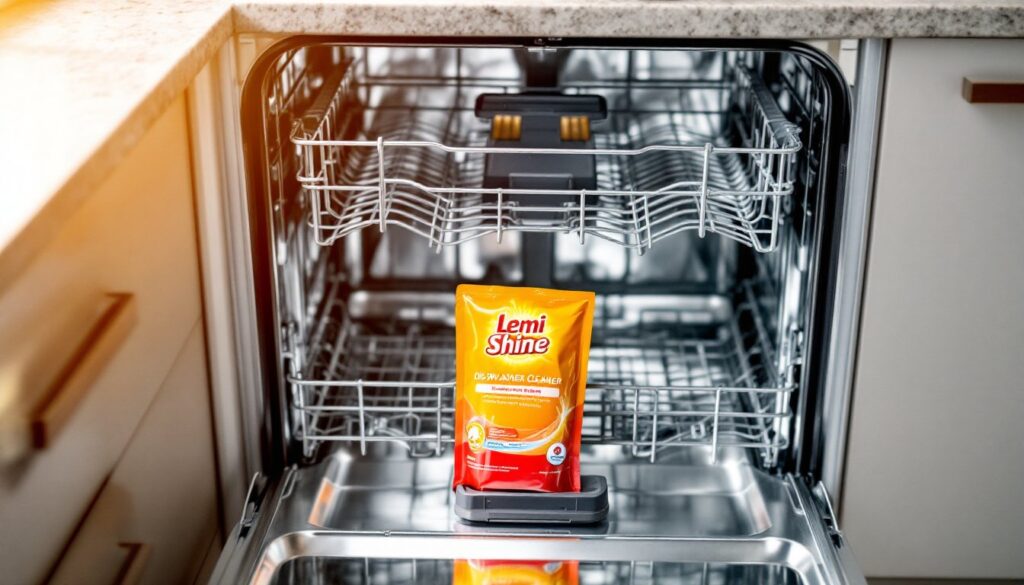
LemiShine comes in a few formats: single-use powder packets, liquid gel, and a machine cleaner pod. The powder packets contain pure citric acid along with surfactants that help lift grease. The liquid gel includes additional cleaning agents and a fresh scent. All versions are designed to work in an empty dishwasher during a hot-water cycle, letting the cleaner circulate through every part of the machine.
Unlike bleach-based cleaners, citric acid won’t damage rubber seals or stainless steel interiors. It’s also biodegradable and septic-safe, which matters if the home’s on a septic system.
Why Your Dishwasher Needs Regular Cleaning
Dishwashers are closed systems that recirculate water, and every cycle leaves behind trace amounts of food particles, grease, detergent, and minerals. Over months, this residue accumulates in places most people never look.
Hard water scale builds up on the heating element and inside the spray arm nozzles. When nozzles clog, water pressure drops and dishes don’t rinse properly. Scale on the heating element reduces efficiency, meaning longer dry times and higher energy costs. In severe cases, mineral buildup can damage the heating element entirely, requiring a repair that costs $150–$300 depending on the model.
Detergent film and grease coat the interior tub, door seal, and filter. This film traps odors and provides a surface for bacteria and mold to grow. That musty smell when opening the door? It’s biofilm, a layer of microorganisms thriving in the moist, food-rich environment.
A dirty filter also forces the pump to work harder, shortening the machine’s lifespan. Most dishwasher manufacturers recommend cleaning the filter monthly and running a machine cleaner every one to three months, depending on water hardness and usage frequency. Skipping maintenance doesn’t just affect cleaning performance, it accelerates wear on mechanical parts.
Regular cleaning with a product like Lemi Shine prevents these issues. It’s cheaper and easier than calling a repair tech or replacing the unit years ahead of schedule.
How to Use Lemi Shine Dishwasher Cleaner for Best Results
Using Lemi Shine is straightforward, but a few steps make a noticeable difference in results. Start by removing any dishes and racks if needed to access the filter and spray arms.
Step-by-Step Cleaning Process
-
Remove and clean the filter. Pull out the lower rack. The filter is typically located at the bottom center of the tub, near the spray arm. Twist or lift to remove it (check the owner’s manual if it’s not obvious). Rinse the filter under hot water, scrubbing with a soft brush to remove trapped food particles and grease. If it’s heavily soiled, soak it in warm water with a teaspoon of dish soap for 10 minutes.
-
Inspect the spray arms. Pull off the lower and upper spray arms. Hold them up to a light and look through the spray holes. Use a toothpick or piece of wire to clear any clogged nozzles. Mineral deposits often harden inside these holes, restricting water flow.
-
Wipe down the door seal and edges. Use a damp cloth to wipe the rubber gasket around the door. Food particles and detergent residue collect here, and it’s a common source of odors. Don’t skip the door edges and the area around the detergent dispenser.
-
Place Lemi Shine in the detergent cup or bottom of the tub. If using a powder packet, place it in the detergent dispenser or directly on the bottom of the tub. For the liquid gel, pour the recommended amount (usually the entire bottle for a single treatment) into the detergent cup. If using a pod, place it on the bottom rack.
-
Run a hot-water cycle. Select the hottest, longest cycle available, typically “Heavy” or “Pots & Pans.” Do not add dishes. The high temperature activates the citric acid and ensures it circulates through every component. If the dishwasher has a “sanitize” or “extra hot” option, use it.
-
Wipe down the interior after the cycle. Once the cycle finishes and the tub cools, open the door and wipe down any loosened residue with a microfiber cloth. Check the spray arms and filter again, sometimes a second rinse cycle helps flush out dislodged debris.
For heavily scaled machines, consider running Lemi Shine through two consecutive cycles the first time, especially if the dishwasher hasn’t been cleaned in over a year.
Key Benefits of Using Lemi Shine for Dishwasher Maintenance
Removes hard water scale effectively. Citric acid is one of the most effective non-toxic descalers available. It dissolves calcium and magnesium buildup without harsh chemicals, restoring water flow through spray arms and improving rinse quality.
Eliminates odors at the source. By breaking down grease and biofilm, Lemi Shine removes the organic material that causes musty smells. Unlike air fresheners or rinse aids that mask odors, this addresses the underlying problem.
Safe for all dishwasher materials. Citric acid won’t corrode stainless steel tubs, degrade rubber seals, or etch plastic components. It’s also septic-safe and biodegradable, so it won’t harm household plumbing or the environment.
Improves cleaning performance. Clean spray nozzles and a descaled heating element mean better water circulation and hotter drying temperatures. Dishes come out clearer, and glassware loses that cloudy film.
Cost-effective maintenance. A box of Lemi Shine packets typically costs $4–$7 and provides three to six treatments. Compare that to a service call for a clogged pump or a replacement heating element. Regular cleaning extends the machine’s lifespan and reduces the likelihood of expensive repairs.
No harsh fumes. Unlike bleach-based cleaners, Lemi Shine doesn’t produce strong chemical odors. It’s a practical choice for households sensitive to strong smells or for those who prefer less aggressive cleaning agents.
Comparing Lemi Shine to Other Dishwasher Cleaning Methods
White vinegar is a popular DIY option. It’s acidic and can dissolve some mineral deposits, but it’s significantly weaker than citric acid. Vinegar also has a strong smell and may not fully remove heavy grease or biofilm. Over time, repeated vinegar use can degrade rubber seals in some dishwasher models. It works for light maintenance but falls short for deep cleaning.
Baking soda is often paired with vinegar in home cleaning routines. While baking soda is mildly abrasive and deodorizing, it doesn’t dissolve mineral scale. It’s better suited for scrubbing surfaces by hand rather than treating the interior of a dishwasher during a cycle.
Commercial dishwasher cleaners like Affresh, Finish, and Cascade also work well. Affresh uses surfactants and citric acid in a tablet form. Finish offers a liquid cleaner with added descaling agents. Cascade’s cleaner includes enzymes for breaking down protein-based residue. All are effective, but Lemi Shine’s pure citric acid formula often performs better in hard water areas where scale is the primary issue.
Bleach can sanitize and remove stains, but it doesn’t dissolve mineral deposits. It’s also corrosive to stainless steel over time and shouldn’t be used in dishwashers with stainless interiors. For homes concerned with appliance longevity and safe cleaning products, citric acid–based cleaners are a safer bet.
Each method has a place, but for routine maintenance in hard water areas, Lemi Shine offers the best balance of effectiveness, safety, and cost.
Tips for Maintaining a Clean Dishwasher Between Deep Cleans
Rinse dishes before loading. Scrape off large food particles and rinse sticky residues. This reduces the load on the filter and prevents food from recirculating during the wash cycle.
Clean the filter monthly. Pull it out, rinse under hot water, and scrub with a brush. This takes two minutes and prevents most odor and drainage issues.
Run hot water at the sink before starting the dishwasher. This ensures the first fill cycle uses hot water, which activates detergent more effectively and helps dissolve grease.
Use the right amount of detergent. More isn’t better. Excess detergent leaves a film that attracts dirt and contributes to buildup. Follow the manufacturer’s dosing guidelines, and adjust based on water hardness.
Leave the door ajar after cycles. Allowing air to circulate prevents mold and mildew from growing on damp surfaces. Many modern dishwashers have an auto-open feature for the door at the end of the cycle.
Wipe the door seal weekly. Use a damp cloth to remove food particles and detergent residue from the rubber gasket. This prevents odors and extends the life of the seal.
Run a monthly maintenance cycle. Use Lemi Shine or another dishwasher cleaner once a month if water is hard, or every two to three months if water is soft. This prevents scale and grease from accumulating to the point where they affect performance.
For additional ideas on keeping kitchen appliances in top shape, regular maintenance beats reactive repairs every time. A few small habits go a long way toward keeping the dishwasher running efficiently and smelling fresh.