Table of Contents
ToggleA 36-inch bathroom vanity hits the sweet spot for most bathrooms, big enough for meaningful counter space and storage, compact enough to fit without overwhelming the room. Whether you’re renovating a hall bath or upgrading a primary suite, this size offers flexibility that smaller vanities can’t match and practicality that oversized units sacrifice. But not all 36-inch vanities are created equal. Cabinet construction, countertop material, sink configuration, and mounting style all affect durability, installation complexity, and long-term satisfaction. This guide breaks down what to look for, how to measure correctly, and which features matter most for your specific project.
Key Takeaways
- A 36 bathroom vanity offers the ideal balance of counter space and functionality, fitting comfortably in bathrooms as small as 5×8 feet while providing 8–10 inches of counter space on each side of the sink.
- Choose between freestanding vanities (easier installation, hides plumbing) and wall-mounted models (modern look, requires blocking and advanced planning) based on your bathroom layout and skill level.
- Cabinet construction with solid wood or plywood, soft-close hinges, and full-extension drawer glides directly impact durability and long-term satisfaction in humid bathroom environments.
- Measure your space multiple times at different points, verify plumbing rough-in locations, and confirm the vanity won’t block door swing or toilet clearance before installation.
- Single-sink configurations are more practical for 36-inch vanities than narrow double-sink options, which compromise on counter space and storage despite appealing to couples.
- Style choices range from traditional raised-panel designs to modern flat-panel finishes, with transitional vanities offering the most flexibility for future updates or resale value.
Why a 36-Inch Vanity Is the Ideal Choice for Most Bathrooms
The 36-inch vanity is the most commonly installed size in residential bathrooms for good reason. It bridges the gap between cramped 24-inch models and sprawling 48-inch-plus units, offering usable counter space on both sides of the sink without dominating the floor plan.
From a practical standpoint, this size accommodates a standard oval undermount sink (16–19 inches wide) while leaving 8–10 inches of counter on each side, enough room for soap dispensers, toothbrush holders, or a small tray. That’s a meaningful upgrade from 30-inch vanities, where counter space disappears fast.
Dimensionally, most 36-inch vanities measure 36 inches wide, 21–22 inches deep, and 32–36 inches tall (before countertop). Actual widths can vary by ¼ inch depending on the manufacturer, so always confirm the measurement if you’re working with a tight alcove or flanking walls.
This size also fits the standard residential bathroom layout referenced in the International Residential Code (IRC), which recommends at least 30 inches of clear floor space in front of fixtures. A 36-inch vanity leaves enough room for comfortable movement in bathrooms as small as 5×8 feet, provided the door swing and toilet placement cooperate.
Another advantage: inventory. Because 36-inch vanities are so common, you’ll find more style, finish, and material options at every price point compared to less popular sizes. Stock cabinets, prefab tops, and replacement parts are easier to source, which matters if you’re on a timeline or budget.
Types of 36-Inch Bathroom Vanities to Consider
Freestanding vs. Wall-Mounted Vanities
Freestanding vanities sit directly on the floor and are the default choice for most DIY installations. They’re easier to level (using shims if needed), hide plumbing connections better, and don’t require blocking or backing in the wall studs. Most freestanding units include an adjustable base or leveling feet, which helps on older floors that aren’t perfectly flat.
The tradeoff: freestanding vanities collect dust and hair underneath, and cleaning around the base can be a hassle. They also make the room feel slightly smaller because they占用 visual and physical floor space.
Wall-mounted (floating) vanities attach directly to wall studs or blocking and leave the floor completely clear. This creates a more open, modern look and makes mopping easier. They’re especially useful in small bathrooms where every visual inch counts.
But wall-mounted units require more planning. You’ll need to install 2×6 or 2×8 blocking between studs at the mounting height (typically 20–22 inches above the finished floor) before the drywall goes up, or locate existing studs and use heavy-duty toggle bolts rated for the vanity’s loaded weight (cabinets plus countertop, sink, and contents can exceed 200 pounds). Plumbing connections are exposed, so you’ll need an escutcheon or decorative cover for the drain and supply lines. These units aren’t beginner-friendly unless you’re comfortable opening walls or working with blocking.
Single Sink vs. Narrow Double Sink Options
Most 36-inch vanities feature a single-sink configuration, which is the most practical layout for this width. You get a centered sink with balanced counter space and straightforward plumbing.
Some manufacturers offer narrow double-sink vanities at 36 inches, typically with two small undermount bowls (12–14 inches each). These appeal to couples sharing a bathroom, but the compromises are real: minimal counter space, tight faucet spacing, and cramped undercounter storage. Unless two sinks are non-negotiable, a single-sink setup delivers better functionality.
If dual sinks matter, consider whether stretching to a 48-inch vanity is feasible. The extra foot makes a significant difference in usability and doesn’t cost much more in materials or labor.
Key Features to Look for in a 36-Inch Vanity
Cabinet construction determines longevity. Solid wood or plywood box construction with dovetail or mortise-and-tenon joinery will outlast particleboard or MDF, especially in humid bathrooms. Check the cabinet’s back panel, ¼-inch plywood is standard, but anything thinner feels flimsy once installed. Soft-close hinges and full-extension drawer glides are worth the upcharge: they reduce wear and make daily use smoother.
Countertop material affects both durability and budget. Prefab tops in cultured marble or solid-surface materials (often called “vanity tops with integral sink”) run $150–$350 and install in minutes, but they limit sink style and can look builder-grade. For more design flexibility and longevity, many designers on Remodelista recommend custom-cut quartz or granite slabs ($400–$800 installed), which allow undermount sinks and edge profiles that elevate the whole bathroom.
Natural stone like granite or marble needs periodic sealing: quartz doesn’t. For DIYers, a prefab top is the easiest route. For a higher-end look, hire a fabricator for the countertop and handle the cabinet installation yourself.
Sink type matters more than most people realize. Undermount sinks look cleaner and make counter cleanup easier (no raised rim to catch grime), but they require a solid-surface or stone countertop and professional installation unless you’re experienced with adhesive and clips. Drop-in (self-rimming) sinks work with any countertop material and are genuinely DIY-friendly, just cut the hole per template, set the sink, and caulk the rim.
Storage layout varies widely. Look for at least one full-height cabinet door or drawer bank to store taller bottles and cleaning supplies. Drawers are more user-friendly than shelves, but they cost more. If you’re buying a budget unit with doors only, plan to add pull-out organizers or lazy susans to maximize the space.
Finally, check the vanity’s back panel. Better units have a pre-cut or removable back section for plumbing access, so you don’t have to cut your own holes or shove the cabinet awkwardly around pipes.
How to Measure and Plan for Your 36-Inch Vanity Installation
Start by measuring the space where the vanity will sit, width, depth, and height to any obstructions (windowsills, light switches, towel bars). Don’t assume your old vanity’s footprint is standard: older homes sometimes have custom or oddball sizes.
Measure at multiple points along the wall. Floors and walls are rarely level or plumb, especially in older construction. A 4-foot level will show high and low spots. If the floor slopes more than ¼ inch over 36 inches, plan to shim the vanity or level the subfloor before installation.
Check the plumbing rough-in dimensions. Standard bathroom sinks have drain and supply lines centered 18 inches from the side wall, but don’t trust this without verifying. Measure from the finished wall surface (not the studs) to the center of the drain stub-out and both supply lines. If your new vanity’s sink placement doesn’t align, you’ll need to relocate the plumbing, a job for a plumber unless you’re comfortable soldering copper or working with PEX.
Depth matters. Most 36-inch vanities are 21–22 inches deep, but wall-mounted units can be as shallow as 18 inches. Confirm the vanity won’t block the door swing, toilet clearance (IRC requires at least 15 inches from the toilet centerline to any side obstruction), or walkway. You need a minimum of 30 inches of clear floor space in front of the vanity per IRC.
If you’re replacing an existing vanity, shut off the water supply and disconnect the plumbing before removal. Check the wall behind the old vanity for damage, mold, or outdated plumbing. Now’s the time to fix it. Patch and prime any drywall, and consider running a ¾-inch plywood backer board across the studs if you’re installing a wall-mounted unit.
Finally, check for level and plumb during installation, not after. Use shims under a freestanding vanity to correct an uneven floor, and confirm the cabinet is plumb side-to-side and front-to-back before securing it. A vanity that’s even ⅛ inch out of level will show in the countertop seams and door gaps.
Style and Design Options for Every Bathroom Aesthetic
Traditional vanities typically feature raised-panel doors, decorative molding, and furniture-style feet. They’re available in wood finishes (cherry, oak, maple) or painted options like white, cream, or gray. These pair well with granite or marble countertops and work in both classic and transitional bathrooms. For inspiration on pairing traditional vanities with modern fixtures, HGTV showcases countless remodel projects.
Modern and contemporary vanities emphasize clean lines, flat-panel doors, and minimal hardware. Finishes range from high-gloss lacquer to natural walnut or matte gray. Wall-mounted configurations are common in modern designs, and quartz countertops with integrated sinks create a seamless look. These styles work best in open, minimalist bathrooms where the vanity doesn’t compete with heavy trim or decorative tile.
Farmhouse and rustic vanities lean into reclaimed wood, distressed finishes, and open-shelf storage. Some repurpose vintage furniture or dry sinks into functional vanities, though these often require custom countertop fabrication and plumbing modifications. If you’re going this route, make sure the cabinet is structurally sound and sealed against moisture, untreated wood will warp and rot in a bathroom.
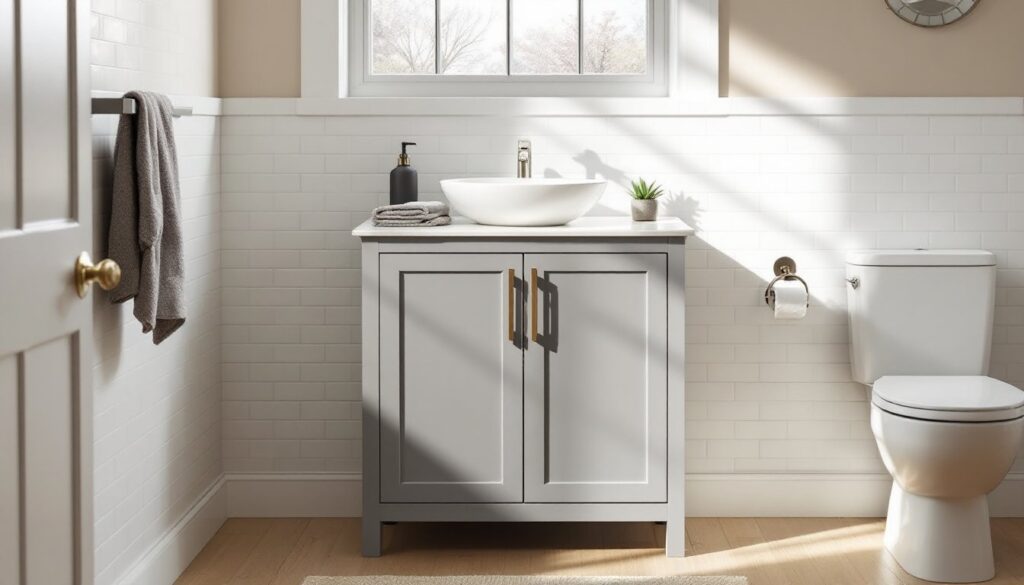
Transitional vanities blend traditional warmth with modern simplicity, think Shaker-style doors, neutral finishes, and sleek hardware. They’re the chameleons of bathroom design and adapt to nearly any tile, paint, or fixture choice. This is the safest bet if you’re renovating to sell or just want flexibility for future updates.
For budget-conscious projects, check 36-inch vanities on sale at major retailers, stock cabinets in white or gray with cultured marble tops start around $300–$500 and can be customized with new hardware and paint if needed.
No matter the style, hardware and fixtures have outsized impact. Swapping builder-grade chrome pulls for brushed nickel, matte black, or brass can elevate even a basic vanity. Match (or intentionally contrast) the faucet finish to the hardware for a cohesive look. Just confirm the faucet fits your sink’s hole configuration before buying, most 36-inch vanities accommodate a standard 4-inch centerset or 8-inch widespread faucet, but vessel sinks and some undermounts require single-hole or wall-mounted faucets.